Childproofing the garage….and what about pets?
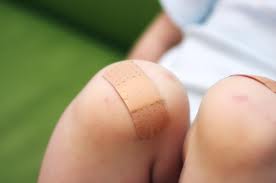
Prevent accidents when you can, but skinned knees are part of childhood…be ready with a first aid kit!
The nicer weather has all of us outside. Most of us keep balls, sports equipment, bikes and other items in the garage that our children will be using. We also have lawn tools, fertilizers, mowers, and other more dangerous items stored in the garage too. Many times we have the inside of our homes safe, but forget about the garage, which can result in a preventable accident. So, take a look at that garage!
Garage:
- Lock up poisonous items. All garages should have a cabinet with a lock. Then you can safely store pesticides, fertilizer, oil, gasoline, paint and other poisonous items that find their home in the garage.
- Keep all buckets free of liquids and stored upside down. Remember that our little ones are very top heavy. They can lean over a bucket and fall in head first. Children can drown in as little as a couple of inches of liquid. Keep those buckets empty, and store them so a child cannot fall in!
- Store gardening equipment out of reach. All the rakes, hedge trimmers, shovels, and other equipment should be out of your child’s reach. Think about purchasing child sized garden tools so your child can “help” you in the yard!
- Never allow your child to play in the car. Keep the car “off limits” when it comes to play. Never allow your child to sit in the driver’s seat and pretend to drive. Remind your child that the car is not a toy.
- Keep your car locked in the garage the keys inside the house. Keeping the car locked will prevent a young child from wandering into the car and potentially locking themself in the car. With electric locks, a child can lock themself in the car and not be able to get out. In the hot summer, a child locked in a hot garage and car can result in a tragedy. This also keeps your child from “driving” that car through the garage wall….happened in our neighborhood a few years ago. A blue Suburban ended up in our neighbor’s family room “driven” by a 4 year old!
- Make it a habit to walk around the back of your car before you enter the driver’s seat to back out. By walking around the back of the car you will see if a small child is behind the vehicle. With SUVs especially, small children are not visible out the back window. Encourage all drivers in the house to physically check behind the car before getting in the driver’s seat!
- All garages with bikes should have a bike helmet for every bike and child! Use the helmets consistently…children and adults!
Many families have pets that have been part of the family even before children! Pets are a wonderful addition, but there are a few guidelines to follow:
- Every year 2.8 million children are bitten with 900,000 requiring medical attention.
- Most bites occur from a familiar family pet. Even a pet that is usually gentle and non aggressive can bite a child that has moved quickly, pulled a tail, scared the animal or is standing at eye level with a dog.
- Children aged 2 trough 9 are at biggest risk. Most bites at this age are on the face.
- Research and choose your family pet carefully. Do not keep a pet that has bitten a child!
- Never leave a child under the age of 5 alone with a dog.
- Teach children to be still when an unfamiliar animal approaches them. Have your child extend the back of his or her fist a few inches for a dog to sniff before petting the do on it’s back.
- Teach your child to not bother a dog when it is eating.
- Have your pet neutered, they are usually less aggressive.
- It is recommended by the American Academy of Pediatrics that families with children do not have turtles, lizards, or rodent type animals as pets. These types of pets harbor dangerous germs for young children.
- Emergency contact numbers. This would include your doctor’s number, dentist’s number, poison control number, and family member’s work and cell phone numbers.
- First aid book There are a couple you can purchase. The American Red Cross First Aid and Safety Book is an easy quick reference.
- Adhesive bandages in several sizes
- Adhesive cloth tape
- Gauze pads and rolls
- Antibiotic ointment
- Antiseptic wipes or spray
- Instant cold compress. (a bag of frozen peas kept in the freezer works great too!)
- Tweezers
- Thermometer
- Cortisone cream
- Benadryl This is important for bee stings or allergic reactions.
- Acetaminophen and/or ibuprofen
- Eyewash solution and eye patch
- Ace wrap
- Calamine lotion
- Sanitizing hand gel
- Disposable gloves
Take a breath, enjoy the joyful moments of each day, and remember you don’t have to be perfect to be the perfect parent.
Cindy

Ironing and Love
Can this be a tool of love?
I have often said that you can tell the stage in life of a family by looking at their laundry basket. Certainly there are times when the basket is full of bibs and sleep sacks, and then training pants and toddler overalls, followed by school clothes, sweaty athletic uniforms, and then emptiness as your babies become young adults. My basket is pretty empty now. But, this past weekend, our youngest child who has been in his first job out of school just a few months, asked if I would iron a couple of shirts for his first business trip. Of course I said yes and he showed up a bit later with about 6 loads of clothes….including 8 shirts and at least that many pairs of pants that needed ironing. I have never liked to iron; as a matter of fact my own mother will often iron for me when she visits because she knows it is not my favorite chore. I must admit that I never understood how my Mom enjoyed ironing for me. Who could enjoy that chore? She had to be lying! So, when my son showed up with all this laundry and ironing, I must admit I was a little annoyed at first. After all, he was leaving the next day and I needed to get it done that evening. As I began washing, folding and yes ironing I began to feel my annoyance turn to love. As I folded his t-shirts, and carefully ironed his dress pants and shirts, I thought of those small shirts and pants from years ago. I thought of the excitement he had now with this new experience on his horizon, and as I carefully folded that last t-shirt my heart was over flowing. I get it now….I understand why my Mom enjoys ironing when she is here. She must feel that same love for me just as I felt for my son as I did something I had never enjoyed or really taken the time to think about in the past; but now was able to stop and take the time to reminisce about washing those many clothes when he was that sweet baby, and busy, busy toddler, and grimy little fisherman, and sweaty football player and now a young man with an exciting new career. I was able to iron those shirts with thought and love because my life has slowed down. I guess I was always doing that laundry with love, I just had the time to realize it now. Those laundry baskets sure are full of much more than just dirty clothes…Moms do all things with love.
Take a breath, enjoy the joyful moments of each day, and remember you don’t have to be perfect to be the perfect parent.
Cindy
Breaks, Sprains, and Nursemaid Elbow….oh my!

Nursemaid’s elbow is a common toddler injury…and this is one of the most common ways for it to happen!
Unfortunately, sometimes childhood comes with broken bones, sprains or the common nursemaid’s elbow injury. Best treatment for all three is staying calm, immobilizing the area and seeking medical help. That bubble wrap sounds better and better, right? 🙂
Suspected Broken Bone or Sprain
- If the injury involves your child’s back or neck, keep your child and yourself calm, and do not let anyone move your child. Call 911.
- If you suspect a broken bone, leave it in the position you found it and splint the injured limb. A splint can be made from boards, broom handles, a piece of cardboard or a couple of magazines wrapped around the injured area. The splint should extend beyond the joint above and below where the suspected injury is.
- Put ice or a cold pack on the area. Do not put the ice or cold pack directly on your child’s skin, place a towel between it. A bag of frozen vegetables works great!
- Stay calm, and try to keep your child calm. Call your child’s medical provider or go directly to the Emergency Room.
- Sprains are very painful and usually swell and bruise fairly quickly. It is often difficult to tell the difference between a sprain and a break. If you are unsure, call your child’s health care provider or head to the Emergency Room.
- Sprains are best treated with RICE (rest, ice, compression, and elevation). Do not put heat in any form on the injured area for at least 24 hours. Heat will increase swelling and pain. Elevate the injured limb and try wrapping it with an elastic bandage. This will help control the swelling…but not too tight! Be sure fingers or toes are still pink and warm!
- Ibuprofen or acetaminophen will help with the discomfort.
Nursemaid’s Elbow
Nursemaid’s elbow is a very common injury especially during the toddler years. It is sometimes called “toddler elbow”. This injury usually happens when a child’s arm is pulled when it is extended, so when a parent is holding a toddler’s hand and the child falls, or a parent swings a child while holding his hand or a “wet noodle” toddler is picked up by the hands when he is refusing to go somewhere. This injury is when the radius (a bone in the forearm) slips partially out of place at the elbow. It is common in young children because often their little joints are loose. A child with a nursemaid’s elbow will usually have pain in the elbow and then refuse to use it. There is not a lot of pain after the initial moment, no swelling, and no real deformity. The child will just hold the arm at his side or slightly bent and will often cry if you try to get him to use the arm.
- Apply ice or cold pack at the joint. Remember, not directly on your child’s skin!
- Splint the arm in the position your child is holding it.
- Call your health care provider or go to the Emergency Room.
- The “fix” is simple and quick, usually just a simple movement of the arm. There is very little discomfort with the “fix” and the child will be using the arm again within a few minutes.
- A child who has had this injury is more prone to it again…be careful about lifting a child by the hands! I always cringe when I see a parent swinging their child playing “airplane”!
We parents never want to see our child injured, but sometimes it just is part of life with a child. We can’t protect our children from all injury, but we can provide a safe home and play area and if an injury occurs, we can be prepared. Stay tuned, the best items for a first aid kit is next.
Take a breath, enjoy the joyful moments of each day, and remember you don’t have to be perfect to be the perfect parent.
Cindy
Your Child’s Disappointments are Life Lessons

I will never forget standing next to our oldest daughter as her and my eyes searched the list of names of who made the “A” basketball team. Her 7th grade friends were on the list….but her name was not. I saw her shoulders slump and the tears come. My heart ached as I thought about the disappointment washing over her. In the scheme of life, this was such a minor disappointment, but for a 12 year old girl, it was catastrophic. My initial thought was that the system was flawed. No child should have this much disappointment…why should there be an “A” squad and a “B” squad? I saw her free throws…she made as many as anyone else…maybe they scored her wrong!
Over the years I have seen all four of our children dealing with disappointments, and it has not been easy, but I have certainly gained perspective since that night. I have learned that the disappointments my children have experienced in life have provided the backbone of their successes later. I have learned that “fixing” all of their disappointments actually gets in the way of their growth. The most valuable lesson through disappointment is perseverance. Our kids will always have disappointments in life, there are birthday parties they won’t be invited to, elections they will lose, teams they won’t make, championships that will be lost, denial letters from first choice colleges, and “thanks for applying” letters from jobs. You know that life brings disappointments. How our children learn to handle and use these disappointments will determine how they will handle them later in life. Our response to their disappointments will shape their responses.
So, I shed a few silent tears with her as we sat in the car that night after learning she didn’t make the team with her friends. We talked about the positives of being able to play more on the “B” team and not sit the bench, we talked about meeting some new friends, and we talked about working hard to improve. I watched her work a little harder at her game, make a few new friends and have a fun season. This story does not end with her becoming a star basketball player in high school….she played but sat the bench a lot. But the lessons she learned far outweighed the disappointment she felt that night at 12.
We as parents need to remember that we can’t always rescue our children from sadness, disappointment, and hurt. We never like to see our children suffer those emotions, but preventing them or “fixing” the situation doesn’t really fix anything at all. We need to learn to step back and let our children navigate the disappointment….thus building their will and character. Wrap them up in your love, stand with them shoulder to shoulder and help them embrace their disappointments as opportunities. What a gift to give your child, learning that they will be loved through hardships in life, and they are strong enough to grow from them.
Take a breath, enjoy the joyful moments of each day, and remember you don’t have to be perfect to be the perfect parent.
Cindy
Happy Valentine’s Day!
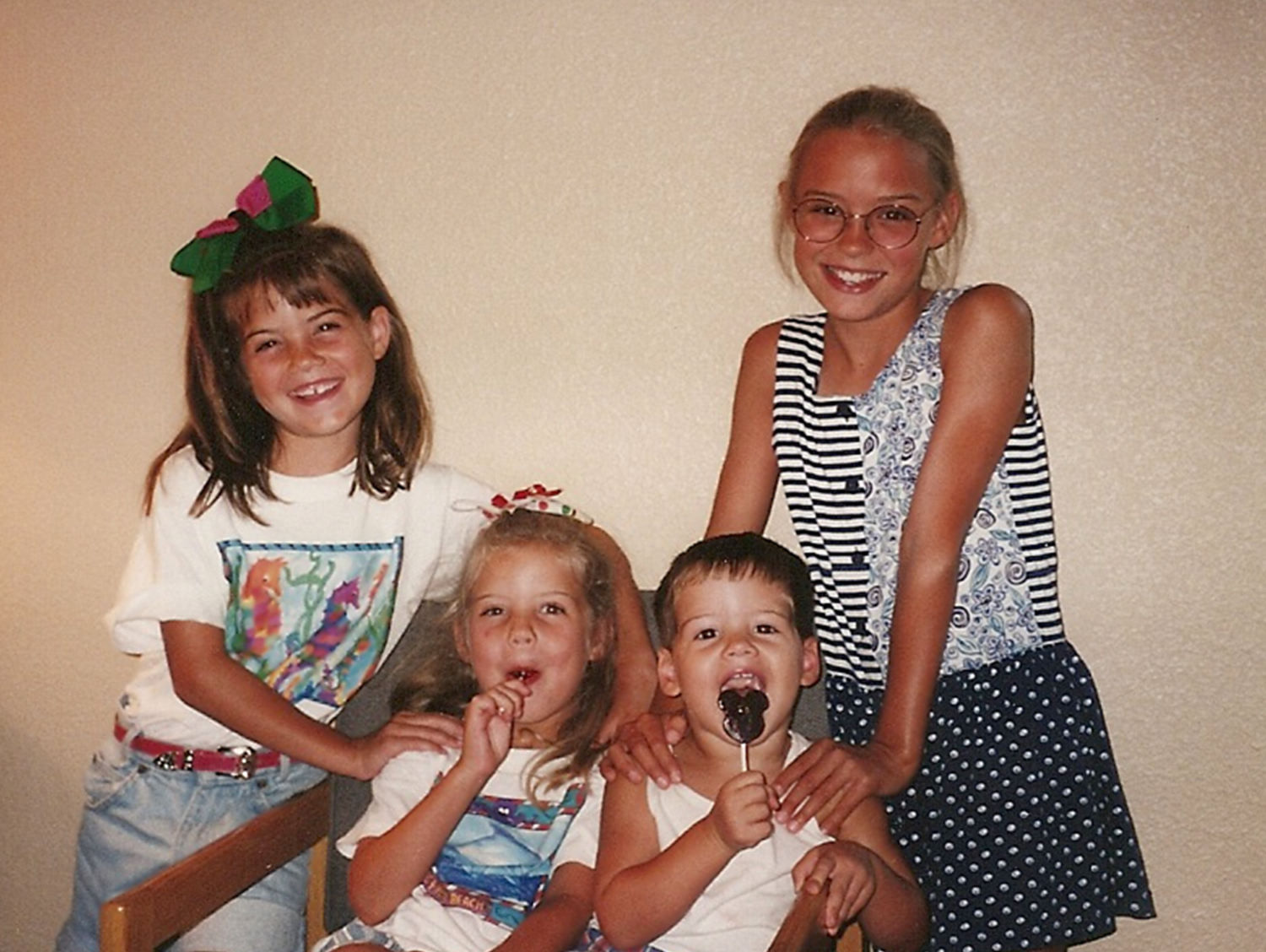
My “little” Valentines are all grown up!

I was talking to several people over the last week about Valentine’s Day, and many Moms and Dads feel like it is another “chore” of parenting anymore. After all we see Valentine hearts in the stores and on TV from the moment the Christmas decorations come down and the stores are filled with “items” that you MUST buy to celebrate LOVE.
But, if we try to remove the commercial, and teach our kids that the day really is just a time to make sure that everyone that is special in our life knows it…what can be wrong with celebrating Valentine’s Day? Besides, if you are like me, I like to celebrate little things in life, it makes it more fun. There is nothing better in the middle of winter than a celebration about love at home.
Remember, these little rituals and traditions endear your children to your family, and build family closeness. I just got a phone call from my 28-year-old daughter who told me she still misses the heart-shaped pancakes and Valentine table decorations that were a tradition in our home. So I guess the red plastic tablecloth and Bisquick pink heart pancakes did mean something! So I hope that you plan a little something special for Valentine’s Day! Here are some suggestions that can help make the celebration fun for your kids. Ignore the commercialism and think simple. Make sure that you save a little time to do something special for that “extra special someone” in your life too.
Break out the red plastic tablecloth and Valentine napkins and serve a Valentine breakfast. There are some quick and easy things you can serve.
- How about instant oatmeal with a heart made with strawberry jam on top?
- Try a strawberry smoothie, quick and easy.
- Heart shaped pancakes are always a hit.
- How about an easy heart-shaped egg sandwich
Heart Shaped Egg Sandwich
- Cut out a heart using a cookie cutter in a piece of bread.
- Butter one side of the bread and put it butter side down in a skillet.
- Crack an egg into a cup and slowly pour that egg into the center of the heart cut out.
- Cook until the egg white is solid and then gently flip the toast and egg over using a spatula.
- Cook a few minutes longer and transfer to a plate…you have a heart-shaped egg sandwich that will keep your child from being hungry till lunch!
Lunch Surprises:
- What about putting a Valentine napkin in your child’s lunch? Write a note or a silly poem.
- A couple Hershey Kisses in the lunch box let’s them know you are thinking of them.
- Try cutting the PB and J into a heart using the cookie cutter!
- Even your older children will enjoy a little surprise in the lunch.
Dinner Surprises:
- Dinner can be heart-shaped pasta, heart-shaped pizza, or just a treat of sugar cookies or Valentine cupcakes.
- Light the candles and celebrate the evening!
- Don’t forget the red tablecloth and Valentine napkins!
Other Activities:
- Help your child make a Valentine to give to someone special and deliver it together.
- Send greetings to Grandparents, Aunts and Uncles. Remember it is a day to TELL those people in their life that they love them!
- Older children love to help bake cookies and deliver them to a neighbor. This is a great way to start teaching your child the simple ways you can reach out to others and bring a smile to someone who might need one!
- Check out seasonal Valentine books from the library.
- Wear red!
Whatever you do, take a moment to give your little Valentine an extra hug and kiss. Celebrate the small things in life in simple ways, it makes life so much more fun! I know I have my red plastic tablecloth out and ready! Happy Valentine’s Day!
Take a breath, enjoy the joyful moments of each day, and remember you don’t have to be perfect to be the perfect parent.
Cindy
It is the weekend, get a little sleep!

Most parents feel “out of order” when they are sleep deprived! Try this weekend to grab a few more minutes of sleep!
Ahh sleep…what new parent isn’t wishing for more? I heard a new parent speak of the first few months of parenting to be as exhausting as the Iron Man Triathlon. Makes sense to me! Not only are new parents sleep deprived, but their fatigue is increased by mental exhaustion. There is so much to learn with a new baby, especially first time parents. Even simple tasks seem more difficult when you are exhausted. I call it “Mommy brain”, it just is difficult to think through a solution to any dilemma, like how to measure the coffee and tend to a crying baby! Eventually everyone will sleep again but what do you do in the meantime?
Simple Steps for Parents:
- Sleep when the baby sleeps. I know everyone tells you this, but how many of you do it? When your baby sleeps, immediately lay down. Leave the dishes in the sink, the laundry on the floor and sleep. Doing “just one more thing” will eat into that very short nap time. You will feel much better with a nap, than with an empty laundry basket that will only be empty a few minutes!
- Don’t stay up late! Dim the lights in the house in the evening, avoid the computer and TV, take a warm shower or bath and then try to relax. Establishing a relaxing bedtime routine will help you drift off to sleep so you are ready for that next feeding in a couple of hours! Even parents of toddlers need an early bedtime. The energy it takes to chase a toddler requires restorative sleep at night!
- Share the night-time baby care routine. Trade off on getting up and comforting. If you are breastfeeding, have Dad bring you the baby after he has changed him. Later, when your milk supply is established well, let Dad give a bottle of pumped breast milk, it is amazing what a 5 or 6 hour stretch of sleep will do for you!
- Walk. Going on long walks in the morning or late afternoon can be an energy booster. It is good for your baby too! Exercise lowers anxiety and stress levels and improves your sleep. Being outside in natural light is very important. Sunlight tells your brain to be alert and happy due to serotonin. So, even if you don’t have the energy to walk, sitting outside for a few minutes getting fresh air and sunlight will give you a bit more energy.
- Eat something besides cookies! When we are tired and hungry, many of us grab something that is fast and sugary. Eating something sweet never helps fatigue. Keep healthy snacks around. If you are a breastfeeding Mom, you need an extra 500 calories a day, and not in cookies! Accept those meals people offer, keep quick healthy snacks of fruits and vegetables prepared, and don’t rely on sugar to help fatigue.
- Drink. Drink water that is! Dehydration can make you feel fatigued. Try to steer clear of too much caffeine and sugary drinks. Even alcohol can alter your sleep patterns. Keep a pitcher of water in your refrigerator, make it look pretty and taste better by floating some fresh fruit in it! You will feel like you are at a spa! Well, it might just encourage you to drink those 6 to 8 glasses of water a day!
Help your baby sleep:
- Watch for sleep cues. Remember your baby will not say, “I’m tired.” Parents have to watch for the cues. Most babies until about age 6 months need to nap every couple of hours. If you notice your baby starting to “zone out” with a blank stare, yawning, rubbing eyes, or getting a bit agitated, then it is time to settle down. Missing the window for sleep results in a baby that is overly tired and doesn’t settle easily. Look at the clock, when you see the sleep cues note how long your baby has been up and then start settling a few minutes earlier the next time.
- Use the 5 S’s. Swaddle your baby, hold your baby side lying or on his stomach, shoosh, and sway. Dr. Harvey Karp’s Happiest Baby on the Block tips really do work! Swaddle your baby for naps and nighttime sleep!
- Try white noise. White noise works wonders for many babies. There are white noise machines, white noise CDs, and even white noise apps for smart phones!
- Make sure your baby naps. Naps promote better sleep. Sleep begets sleep in children. Children that are overly tired sleep less…it is true! Children need to nap during the day until about age 3. Newborns will nap every couple of hours, by 6 months of age most babies will take a longer morning nap and a longer afternoon nap, by 12 to 15 months most children will go to one afternoon nap, and all children will need a nap or “rest time” through age three. Children that are well rested with naps will sleep easier and longer at night. Do not keep your child up during the day hoping that you will get a longer stretch of sleep at night!
- Try wearing your baby during the day. If you can “catch up” your baby’s sleep during the day. Many babies like to be “worn” and will nap well that way!
- Set your baby’s internal clock. In the mornings, stand in front of a window or if the weather is nice take a walk in natural light. Keep the lights on during the day. When evening arrives, start to dim the lights about an hour before bedtime. Even if your baby is not sleeping through the night, treat every feeding after “bedtime” as a night-time feeding. Feed in the dark, no interaction, and no diaper change unless your baby is very uncomfortable or has a dirty diaper. Soon your baby will have an inner clock that knows the difference between day and night.
- Start a routine. Children thrive on routines. Most babies become a bit more predictable around 3 months of age. However, you can start a nap time and bed time routine that is the same every day before that 3 month mark. Provide activities that are soothing like a bath, massage, story, song, and a cuddle. Repeat these routines and your baby will begin to relax with the predictability. Pick a “bedtime” and remember that children are wired “early to bed and early to rise.”
- Help your baby self soothe. At around four months of age, babies can learn to self soothe by using hands, fingers, or pacifiers to suck, or a fuss cry to calm. When your baby starts to wake, quietly help your baby find their hands or a pacifier, lay your hand on their tummy and head and ” shoosh”. Soon your baby will learn to soothe himself back to sleep when he wakes in the middle of a sleep cycle.
- Be calm. Babies can tell when a parent is stressed and that keeps everyone awake! Just realize that this stage will pass too…take a deep breath and stay calm when you are trying to calm a fussy baby. Try one calming method at a time, not all at once! Try swaddling and rocking calmly with a bit of white noise. A walk in the stroller will help many babies. Find what works for you, but keep it calm.
So Mom and Dad, work together this weekend and try to get a little extra sleep! Concentrate on these few tips and see if a few more minutes of sleep makes that overwhelming sense of fatigue fade just a bit. If not, remember, this will pass, you will sleep again…I promise. Happy Friday!
Take a breath, enjoy the joyful moments of each day, and remember you don’t have to be perfect to be the perfect parent.
Cindy
Fun holiday eating for your child!

How about a fruit candy cane to encourage a little healthy eating?!
Wow, the weekend seems like it was only a few hours! Busy times in all of our homes during the holidays. I opened my refrigerator last night and was shocked at what I saw. After a Christmas party at our home, my choices for dinner ingredients seemed to contain either sugar or cheese! If you are like me, it is difficult to continue to eat in a somewhat healthy way during the holidays. It is fun to have festive food, but continuous unhealthy choices can make you feel sluggish not to mention what it does to the waistline. So, this week I commit to going back to 5 days of healthy eating, because I am sure the weekend will bring some more holiday eating again! I found some great ideas to focus on some fun healthy holiday eating for your kids. Give a few of these a try and then share some fun ideas you have too! Remember, one of the keys to healthy eating, especially for toddlers, is having fun. These ideas will give your child’s meals a little bit of the holiday spirit, but just might help him eat a few fruits and vegetables too! Happy holiday eating!
Candy Cane Fruit
Slice strawberries and bananas. Alternate the slices in the shape of a candy cane.www.kitchenfunwithmy3sons.com
Rudolph
Use Laughing Cow Light Swiss Cheese Wedges to form Rudolph’s head. Place two mini-pretzels in the corners of the wedge for antlers. Add raisins for eyes and a little red pepper for a nose! www.cutefoodforkids.com
Holiday Wreaths
Cut cucumbers into one inch thick slices. Scoop out a bit of the middle and fill with a favorite dip. Put a few chunks of red pepper for berries around the edge. www.superhealthykids.com
Pasta Shish-ka-bobs
Cooked cheese tortellini, sliced cherry tomatoes, and cucumber slices on a skewer
Fruit on a stick
Mandarin oranges, marshmallows, sliced strawberries, pineapple chunks, and banana slices on a skewer. How about some yogurt dip too!
Mini cheeseburger on a stick
Place a chunk of whole wheat bread, meatball, chunk of cheese, sliced cherry tomato, and maybe even a pickle on a skewer! Try a little ketchup for dip!
Frosty the Snow Man
Mini bagel spread with cream cheese. Place a carrot stick in the center hole and use raisins to make the button eyes and a smile!
White Chocolate dipped Oreo Cookies…oh wait that is for ME…! Have some healthy fun with food during the holidays with your child. You will all feel better!
Take a breath, enjoy the joyful moments of each day, and remember you don’t have to be perfect to be the perfect parent.
Cindy
Burns, Bites, and Bumps on the Head!

One of the first words many parents teach children is “hot”!
Little fingers often explore hot curling irons, stove tops, fire places or other hot things. About 40,000 children are burned each year and half of these burns happen to children under age 4.
Burns hurt! Of course the best way to prevent burns is to protect your child with good child proofing in your home, but sometimes accidents just happen.
There are three levels of burns:
- 1st degree burn is dry, red and painful
- 2nd degree burn is red with blistering or moist skin and painful
- 3rd degree burn is white or charred, leathery and not painful
Immediate treatment of minor burns includes:
- Calm and reassure the child, and yourself!
- Run cool water over the burn or cover with a cool wet towel for several minutes. The faster you can cool down the skin, the more likely the burn will be less severe.
- Cover the burn with a dry, sterile bandage or dressing.
- Protect the burn from pressure and friction from clothing.
- Give acetaminophen or ibuprofen for discomfort.
- If there is blistering over more than a small are of skin (2 to 3 inches) or if there is a burn on the hands, feet, face, groin area, bottom, or on a major joint, call your health care provider.
- If you have any concern or worry, call your health care provider.
Do Not:
- …Apply ointment, butter, ice, or any household remedy to the burn.
- …Break the blister or cut away dead skin.
- …Remove clothing stuck to burn.
Bites, both animal and people!
Animal bites by familiar dogs are quite common. At times, even the most docile family pet can bite a child when teased or irritated. Children who are at eye level with dogs are most at risk. Never trust your child alone with a dog…even the family pet. We also know that some children can be bitten by other children, it happens!
- Clean the wound with soap and water, let water run over the wound for a few minutes.
- Dry the wound and cover it with sterile gauze.
- Always call your health care provider if an animal or human bite breaks the skin. Many bites both animal and human require antibiotics to prevent infection.
- If your child was bitten or scratched by an unfamiliar or wild animal, report the incident to the local police. Some animals may have to be captured, confined, and observed for rabies. Do not try to capture the animal yourself!
Falls and bumps to the head are another common childhood accident.
There is nothing scarier than the sound of your child’s head hitting the floor! Most childhood falls result in injury to the scalp only. Those injuries are usually more scary than serious. But how do you know?
- Superficial head/scalp wounds bleed ALOT. The scalp is rich with blood vessels, so even small wounds bleed heavily.
- The “goose egg” that often appears is a result of the scalp’s vessels leaking blood under the scalp. It is often immediate, and usually not serious.
- Call the doctor if:
- Your child has lost consciousness; even for a moment
- Won’t stop crying
- Vomits
- Is difficult to awaken
- Seems off-balance and/or not acting like himself or herself
If your child is alert, comforts easily and is behaving normally after a head injury:
- Apply an ice pack to the area for a few minutes every couple of hours. If you use ice, always wrap it in a cloth or put it in a sock to protect the skin. A bag of frozen peas works great!
- Observe your child for the next 24 hours, if you aren’t comfortable with how your child is acting, give your healthcare provider a call.
- If your child falls asleep, (often happens if a child has been crying and upset) check in once or twice to see if there is any change in your child’s color or breathing. If all looks well, there is not need to keep waking your child.
- If you are uncomfortable with your child sleeping, wake your child by sitting him or her up. If your child fusses and then settles back down he or she is fine. If he or she does not waken, doesn’t fuss, or is very lethargic, give your health care provider a call.
Prevention of head injuries is always best! Be sure that your child wears a bike helmet when biking, skating, riding a scooter, or being towed on or behind a bike. (Parents, set a good example and wear your helmet too!) Be sure that football equipment is in good shape and fits properly. If you ever question that your child has a concussion, keep them from playing until they are cleared by the doctor and symptom free!
Preparation is the key to handling common injuries during childhood. Don’t over-react, but look at the situation and respond appropriately. Remember, your anxiety increases your child’s! More First Aid tips to come!
Take a breath, enjoy the joyful moments of each day, and remember you don’t have to be perfect to be the perfect parent.
Cindy
Friday….celebrate with a little R and R.
My favorite day of the week is here again. I am looking forward to a “date night” tonight. Even with being an “empty nester”, a date night sounds exciting. It is nice to be out and concentrating only on each other and not the pile of laundry that still is sitting in my laundry room. Out of site, out of mind, right? I hope that you take the time to make plans to “reconnect” with your partner, your children, and yourself. Sit down and make 3 goals today for the next week. Think of 1 thing you can do for yourself to refill that pitcher, 1 thing to do for your children that might break up the regular routine of the week and make life more fun, and 1 thing to do for your partner to stay connected. These might be just small changes in your life. A sticky note here, a lunch surprise there, a candle at dinner, a half hour of reading…..simple ways to reconnect, refill, and enjoy the moment.
Tips on getting a little R and R during your week:
- When your child takes a nap, lie on the couch for just 10 minutes. Do not make a bee line to the computer or your list of chores or flip on the TV. Let your mind wander. Let your mind rest, staying “plugged in” doesn’t allow that to happen. Sometimes actually take a nap! 🙂 But you deserve at LEAST 10 minutes.
- Redefine what really needs to be done. Remember, your standards may have to be a bit different when you have young children. If you have hugged your child, everyone had at least one clean item to wear, there was something fairly healthy to eat in the house and you have “connected” with your partner for just a few minutes, your day was hugely successful!
- Be protective of your nighttime sleep. Go to bed early, keep the TV off, practice relaxation prior to bed, and turn the baby monitor down so that you hear only when your baby REALLY needs you and not just normal “baby” sounds. Remember, your baby WILL eventually sleep through the night, and you WILL hear your baby if your baby needs you.
Now, celebrate Friday. Remember, small celebrations make life much more interesting. Don’t allow another day to go by without celebrating SOMETHING…maybe just the fact that Friday is here….I know I am celebrating Friday! TGIF!
Take a breath, enjoy the joyful moments of each day, and remember you don’t have to be perfect to be the perfect parent.
Cindy
The preschool years!
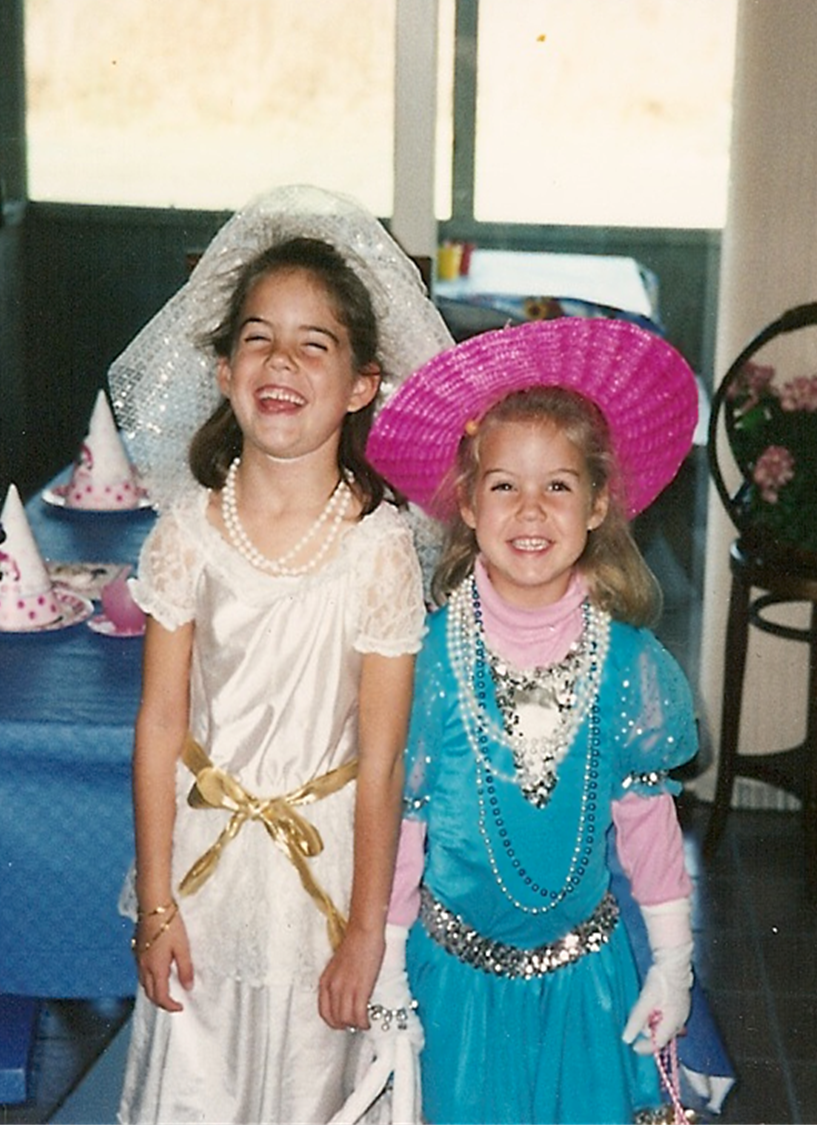
Dress up and pretend play is part of a preschooler’s life! Kelsey and Kaitlyn getting ready for a “fancy” tea party we had with friends!
One of my favorite stages is preschool age, age 3 to 5. Those years in our house were full of imagination, dolls, trains, budding friendships, energy, and questions! Preschoolers can now run, jump, climb, and pedal a bike. They no longer “toddle”! Tumbling and outdoor playgrounds are favorites. Fine motor control is becoming more defined. They are starting to cut with scissors, hold pencils like an adult, and string beads. Blocks, Legos and other construction materials are a favorite along with anything to role play like dress up clothes and dolls.
The preschooler’s mind is like a sponge. Have you ever spent the afternoon with a curious preschooler? Learn to answer the question “Why?” I know I bought a book about how things work to try to keep up with my son when he was 5! A preschool aged child looks at the world with imaginative eyes, and has very magical thinking. Sometimes they tell “stories” and it is difficult for them to tell the difference between what is “real” and what is “pretend”. Be prepared for some “tall” tales.
Board games are fun at this age, but at 4 and 5 children can have a very difficult time if they don’t win. They are not very good sports! It is important to play games and talk about the feeling of losing and winning. A preschooler’s vocabulary will be quite large, and often they will sound much more adult than their emotions are. They are verbal and bossy!
Such a fun age. Children at this age will embrace the world around them and want to do it all. Have fun doing all the “kid” activities in your community and watching your child start to form real friendships. Here are a few milestones you should be seeing in your 4 to 5-year-old child as they prepare to enter kindergarten in the near future!
Large motor skills for a 4-year-old
- Stands on tip toes
- Walks up and down stairs using alternating feet
- Runs
- Kicks a ball
- Rides a tricycle
- Stands on one foot for at least 5 seconds
Large motor skills for a 5-year-old
- Throws a ball overhand
- Catches a bounced ball most of the time
- Kicks a ball forward well
- Hops on one foot
- Stands on one foot for at least 10 seconds
- Skip with alternating feet
- Swings
- May learn to ride a two-wheel bike
Fine motor skills for a 4 and 5-year-old
- Cuts a straight line with scissors
- Turns the pages in a book one at a time
- Uses eating utensils well
- Begins to copy capital letters and shapes
- Draws a 4 to 5 part person
- Can button and dress self
- Can learn to tie at 5
- Can build a tower of 6 to 9 blocks
- Can string beads and lace “sewing cards”
Language skills for a 4 and 5-year-old
- Answers simple questions
- Asks questions
- Speaks clearly enough that strangers can understand
- Speaks in complete sentences
- Beginning to use adjectives, pronouns, and prepositions
- Can say first and last name
- At 5 should be learning address
Social skills for a 4 and 5-year-old
- Becomes more social, may have a “best friend”
- Starts to play more with the same gender
- Will play cooperatively
- Can be very bossy
- Will take turns and share with some encouragement
- Starts to develop empathy for others
- Not ready for competitive play, hates to lose
- Learning rules of games
- Likes group pretend play, will play “house”
- Likes dramatic play with dolls, puppets, and figurines
Intellectual skills for a 4 and 5-year-old
- Can name at least 4 colors
- Can identify some numbers, letters, and shapes
- Is able to count items
- Can sort items using several characteristics like color, shape, or purpose
- Remembers parts of a story and can tell you what comes next
- Understands same and different
- Can play simple board and card games
- Beginning to understand time
- Starts to understand time
- recognizes name and beginning to write it
- Interest in nature and science and how things work
- Will be curious about their body, will ask about body parts…give the correct names!
- Will be curious about “where babies come from” give small amounts of information at a time until they are satisfied.
- Will be aware that girls and boys look different, may play “doctor”…teach children what is private, that no one touches in the bathing suit zone, and keep conversations open so children feel comfortable asking questions, remember children may ask sexual questions, but they do NOT have sexual feelings at this age! Relax!
Parenting tips
- Read, read, read to your child! Take them to the library and help them develop a love for books and reading.
- Give your child simple chores in the house. Give praise for their help!
- Provide social interaction for your child. This helps them learn the value of friends, cooperative play, empathy, and sharing.
- Be very consistent with discipline. Give expectations of the behavior you expect prior to going anywhere. Follow up with consequences when your child does not follow the expectations. Do not melt down yourself, no emotion, loving discipline. Time out still works!
- Speak to your child in complete sentences using adult words. This will help your child develop good grammar and use correct words and phrases.
- Help your child problem solve step by step.
- Give your child choices each day…clothing, some snacks, books to read etc. This gives a feeling of control and increases cooperation.
- Explore your community with your child; the zoo, museums, parks, nature centers, playgrounds…..build your child’s interests! They are ready!
Important links that will help you:
- “Learn the Signs. Act Early.” Campaign
This campaign educates parents about childhood development, including early warning signs of autism and other developmental disorders, and it encourages developmental screening and intervention. It will give you tips on how to determine if your child needs screening. - Overview of Early Intervention
Learn more about early intervention services from the National Dissemination Center for Children with Disabilities. Find out about your state’s early intervention program and how to access it. - Bright Futures

Bright Futures materials for families are available for parenting tips for children from birth to 21 years of age. This is provided by the American Academy of Pediatrics. - Developmental Surveillance and Screening Guidelines
This American Academy of Pediatrics website provides guidelines on surveillance and screening for developmental delays in children. - National Association for the Education of Young Children (NAEYC)
NAEYC provides accreditation for early childhood programs and preschools that meet certain standards. You can search for an accredited program or preschool near you. NAEYC also provides resources, tools, and information for parents.
Every day is an adventure with your preschooler. So, begin to prepare for the endless questions, pull out the board games, (my least favorite is Candyland, my suggestion is stack the card deck so it doesn’t last forever!), find some dress up clothes and play house, plan some play dates and sit back and watch your child grow! Before you know it, your preschooler will be heading to kindergarten!
Take a breath, enjoy the joyful moments of each day, and remember you don’t have to be perfect to be the perfect parent.
Cindy
 raisingkidswithlove