Is my child reaching developmental milestones?
My husband and I went out to breakfast this morning and he was “flirting” with another girl! He is a sucker for cute cheeks and bright smiles. We saw a darling baby with both and a big bow headband to top it off! The parents allowed us to ooh and ahh over their precious daughter and later we were talking about how we loved that sweet stage of development when our children would give us that toothless grin. Each developmental stage has milestones that parents love, and we want all children to reach those milestones on time.
Developmental milestones are things that most children do at certain ages. Reaching those milestones show us that children are developing well. There is a wide range of normal with development, but there are certain red flags when parents should alert their child’s doctor.
We hear a lot about autism. Early detection of autism or any developmental delay is important so that a child can receive help early. Early detection and intervention makes a huge difference for children! Your child’s doctor should be looking at your child’s growth and development at each well child check. The American Academy of Pediatrics recommends that a child’s physician screen for developmental delays or early signs of autism at 9 months, 18 months, and 24 to 30 months. Parents too can look for red flags that may need to be discussed with their child’s doctor.
Red Flags
Age 2 to 3 months
- Your baby does not make good eye contact with you.
Age 3 months
- Your baby does not smile at you.
Age 6 months
- Your baby does not laugh.
Age 9 months
- Your baby is not babbling or making consonant sounds.
Age 12 months
- Your baby does not turn to you when you call his or her name.
- Your baby does not wave bye bye with encouragement.
Age 12 to 14 months
- Your baby does not have any words.
Age 14 months
- Your baby does not point at things.
Age 18 months
- Your baby does not pretend.
Don’t panic if you do not see one of these milestones, many times with encouragement or by providing increased opportunity children reach the milestone. However, a conversation with your child’s doctor is important. Because you are a parent, you know your child best! If you have concerns, be sure that you insist that you have time to discuss them with your child’s doctor. Every state has an early intervention program that can assess if a child has a developmental delay from birth to age 3. These programs are free and referrals can be made by a health care professional or by a parent. Indiana’s early intervention program is First Steps. Any parent can access their states early intervention program by calling The National Dissemination Center for Children with Disabilities at 1-800-695-0285. This center can give you your state’s early intervention program’s contact information.
If your child is age 3 or older and you have concerns, the public school system will complete the evaluation. Contact your local elementary school or school board and they will give you the information needed to obtain developmental screening for you child.
Most importantly, if you are concerned about your child’s development, don’t wait! The earlier your child gets help, the more successful it is! You are the parent, you are your child’s advocate!
Take a breath, enjoy the joyful moments of each day, and remember you don’t have to be perfect to be the perfect parent.
Cindy

Helpful websites:
The weekend is here! I am going to cherish it!

What a great quote for me….remembering to keep my mind present in the moment is often a challenge…but when I am not I miss the gifts of each moment….
Friday is almost here again! TGIF! Brad and I have plans to be on a lake with all four of our kids this weekend and I am really looking forward to it. Whenever we plan a family activity there is a bit of work involved. Work has been busier than usual this week and tonight as I thought about going to the grocery, loading the car, and finishing the laundry; for a very brief moment I questioned whether I really felt like going this weekend … but only for a moment. The years have flown quickly, and I am still trying to be “present” as much as I can in my kids’ lives, and am trying to live and enjoy every moment. In another couple of years, this season of my life will have passed too.
As I have said before, there are only 940 Saturdays between the birth of a child and that same child leaving for college! By age four, 208 Saturdays are gone, by ten 520. I had never thought about time and raising children in those terms when my kids were young. It does seem that time flies so much more quickly when you look back. There are moments that seem eternal during parenting (the sleepless nights of infancy, the toddler challenges of potty training, the nights of homework, and challenges of curfew during those teen years) but when put in the time frame of only 940 Saturdays, well the time is so short.
I don’t say this to make you feel like you need to cram more parenting into each of your days, I say this so that you think about being truly “present” for your parenting. Don’t just go through the motions each day or wish for what will come next; and when you find yourself doing that stop take a breath, and truly be present. Be present when your child is eating those strained carrots, be present when your toddler is emptying the cupboard in the kitchen, be present when your school aged child is struggling with spelling, be present when your teen shares with you before bed, and be present when you get that 11:00 pm phone call or text from your college aged child. Every stage, every challenge, every moment of chaos, every precious moment of family time is brief and fleeting. If you are not truly present, the moments will be gone.
There is no magic way to slow down time (I wish there was), so just concentrate on this Saturday…one of those 940 Saturdays. Don’t just go through the motions, but be present for every moment with your child. I am going to be present this weekend with my “adult” kids and husband…and I will tuck this moment away with all the other moments I cherish. Parenting is awesome each and every day. And by the way, every one of my kids are past those 940 Saturdays between birth and college…so I feel totally blessed to continue to be present in their lives…every moment we have as a family together is a gift. So, no matter whether it is your 10th Saturday, 940th Saturday, or like me your 1,460th Saturday as a parent, build your relationships and memories starting now, be present, ENJOY…don’t wish it away.
Take a breath, enjoy the joyful moments of each day, and remember you don’t have to be perfect to be the perfect parent.
Cindy
Embrace every part of your child….including their temperament

A great combination of active and calm, distractible and intense, regular and chaotic, sensitive and tough, outgoing and shy, goofy and serious, and always love…multiple personality traits and a family better because of it!
It isn’t very often that all of us are together for an extended time. I am looking forward to some family time in the next couple of weeks. There is nothing better than being together and seeing who each of our children have become. When all of us are together, I often sit and admire the wonderful special qualities of each of the kids. All four are similar in many ways, but so different in many other ways. Their personalities are unique…and it makes our time together so much more enjoyable. How do your kids develop that wonderful uniqueness that is their own? There are so many pieces of the puzzle, but a big part of that puzzle is a child’s temperament.
Our first child was easy. She smiled often, slept through the night early on, cried very little, and adapted easily. This parenting “gig” was a piece of cake! I read the books, and she complied. So simple. I was even a little smug about the whole parenting thing. Child number two arrived with a set of lungs;…she cried from the moment she greeted the world. Little “sweet fussiness” didn’t sleep through the night until she was close to 9 months old, was intense, and simply didn’t follow the book. All those parenting tips we used on the first, didn’t seem to work on the second. Number three and number four also came with their own uniqueness. Children enter this world with a group of personality traits that are evident from the first few weeks of life. This personality or temperament is not necessarily “good” or “bad”. The response a parent has to the child’s personality or temperament will often affect the type of behavior a child will exhibit. Parenting according to a child’s temperament will help a child build on the positive pieces of their temperament and will teach a child how to handle situations that may be challenging to their temperament. Parents must learn to adjust their parenting style to their child’s temperament, not all parenting tips work the same on every child! I am still learning this!
There are 9 personality traits that make up our temperaments.
- Activity level
- Regularity
- Adaptability
- Approach or withdrawal
- Sensitivity
- Emotional response
- Distractibility
- Mood
- Persistence/attention span
The combination of these traits will make up your child’s temperament and your own. The “goodness of fit” is how a parent’s temperament fits with their child’s. It can be very challenging if you are very different from each other. An active child who is curious, constantly on the move and sleeps very little can be very challenging to a less active, cautious parent! The bending of parent and child to “fit” actually will help both the parent and child overcome some of their personality challenges. I see this more and more as my children have become older. Some of my greatest growth as a person has come from the challenge of fitting my parenting to each of my children’s temperaments. I have learned to be persistent with my persistent child, more positive with my more negative child, more sensitive to my sensitive child, and more flexible with all of them.
Our family conversations are now peppered with intensity, humor, sensitivity, positiveness, analytical thinking, goofiness, open-mindedness, passion, quietness, loudness, and laughter. No wonder I am worn out after conversations with all four…but no wonder our time together is so wonderful.
Let’s look at how to parent each of our children in a way that allows the best parts of their temperament to shine, and to respect all pieces of their personality puzzle. Don’t miss what is special about your child!….Stay tuned… 🙂
Take a breath, enjoy the joyful moments of each day, and remember you don’t have to be perfect to be the perfect parent.
Cindy

When and how to wean from the breast, a big milestone for both of you!

Are you ready to wean? Is your child? How can you make it easier on yourself and your child when the time is right?
There are not very many moments that are sweeter than nursing or bottle feeding your sleepy baby. What precious memories I have of those moments, and how quickly they pass. There are many precious moments in parenting, and as your child grows, sometimes there is a twinge of sadness when your child moves on to another stage. Weaning is a natural stage in a child’s growth and development, but it can be filled with many emotions, some excitement and some sadness as your baby becomes a bit more independent.
When should you wean?
Babies should have breast milk or formula for the first full year of life. Deciding when to wean from the breast is a very personal decision. It will be easier to wean from the breast after a year of age because your baby will be eating more solids and may naturally decrease the amount of nursing. There will be less breast engorgement for Mom too because your baby will be taking less breast milk which will decrease your production.
Weaning does not have to be all or nothing. Some Moms choose to wean during the day and breastfeed at night, and some Moms will wean except for the morning and evening feeding. The best way to wean is to be flexible and pay attention to what works best for you and your baby.
Weaning is easier if the child has taken milk from other sources besides the breast. If your child is at least a year old, you will wean to cows milk in a cup. If your child is younger than a year, you will wean to formula in a bottle. Sometimes Mom will be the initiator in the weaning process, and sometimes the child will show the signs of being ready. Children may show indifference or be irritable when given the breast, or they may nurse for shorter and shorter sessions. Many babies show readiness to wean between age one and two. Babies who are bottle fed should be weaned to a cup at about age one.
There are four weaning processes:
- Abrupt weaning, when a Mom stops nursing quickly. This may occur because of an illness or because medications that the mom is taking are dangerous for the baby.
- Gradual weaning, when one feeding is eliminated every couple of days or weeks and Mom gives another form of nutrition or comfort.
- Partial weaning, when a mom keeps one or two nursing sessions a day and replaces the others with another form of nutrition.
- Child led weaning, when the child decides that he or she is ready to wean, sometimes this can be abrupt but usually this is a gradual process.
How to Wean
1. If possible, wean your baby when there is not a lot of extra stress in you and your baby’s life.
2. Replace one feeding at a time. It is easiest to begin with the feeding that is the least favorite. If your baby is a year old or older, replace this feeding with a snack and a drink of cow’s milk from a cup. If your baby is less than a year, replace with formula from a bottle or a cup.
3. Give yourself and your baby a few days and then replace a second feeding.
4. The method of “don’t offer, don’t refuse” works well for many Moms. This means that you do not offer the breast for one feeding at a time, but if your baby is interested, you do not refuse the feeding.
5. Try to limit situations that encourage breastfeeding. For example, do not sit in the chair that you normally breast feed in, but be open to breastfeeding when your baby needs it. Change your routine a bit during the day to keep your baby engaged in other things when he or she would normally nurse. Wear clothing that makes nursing a bit more inaccessible.
6. If your breasts feel full from skipping a feeding, express a small amount of milk, just enough to relieve the discomfort. Soon your breasts will produce less milk and this will not be needed. Cold compresses and cabbage leaves will also help with comfort. Do not bind your breasts or drink fewer fluids. Check your breasts to make sure you are not developing any firm, tender areas. Call your doctor if areas become red, sore, or warm, or if you have a fever. This is more likely to occur with abrupt stopping of nursing.
7. Ask Dad to help distract your baby during a normal nursing time. This is especially helpful when you are trying to eliminate the bedtime nursing. This also helps increase the important time between Dad and baby.
8. If your baby starts to pick up other comfort habits like thumb sucking or a “lovey”, do not discourage it! Your baby is using the other comfort habits to adjust to the change.
9. Slowly decrease the amount of time your baby nurses at a feeding, and offer more milk from the cup before and after the feeding.
10. Expect before nap and bedtime nursing to be the last to end.
11. When you are ready to end these nursing sessions, you should already have a bedtime and nap routine established. Try to switch up the routine so that nursing is not the last thing your baby does before sleep. Keeping sleep from being equated with nursing will help the transition. Reading a book, giving a back rub, singing a song, giving a healthy snack etc. all should be part of the routine. Lots of activity and exercise during the day will help your little one be tired and be ready to rest.
12. Sometimes having Dad or another caregiver do the bedtime routine will keep your baby from thinking about nursing before sleep.
13. Make sure that you are giving your baby plenty of touch time during the day. Continue to snuggle, hold, and rock your baby.
Be prepared to have many feelings during this process–and have set backs occasionally. If the amount of time that a baby is nursing is decreased, eventually the amount of milk that you produce will also decrease, and your baby will nurse less when there is less milk supply. As a child increases his or her intake of food and milk from a cup, breastfeeding will decrease and the child will eventually wean himself or herself.
Weaning from the breast is a big milestone for you and your baby! When the time is right, both of you will adjust just fine! Tuck those precious moments of nursing away in your heart along with the many memories you will store there!
Take a breath, enjoy the joyful moments of each day, and remember you don’t have to be perfect to be the perfect parent.
Cindy
The gift of Grandparents!
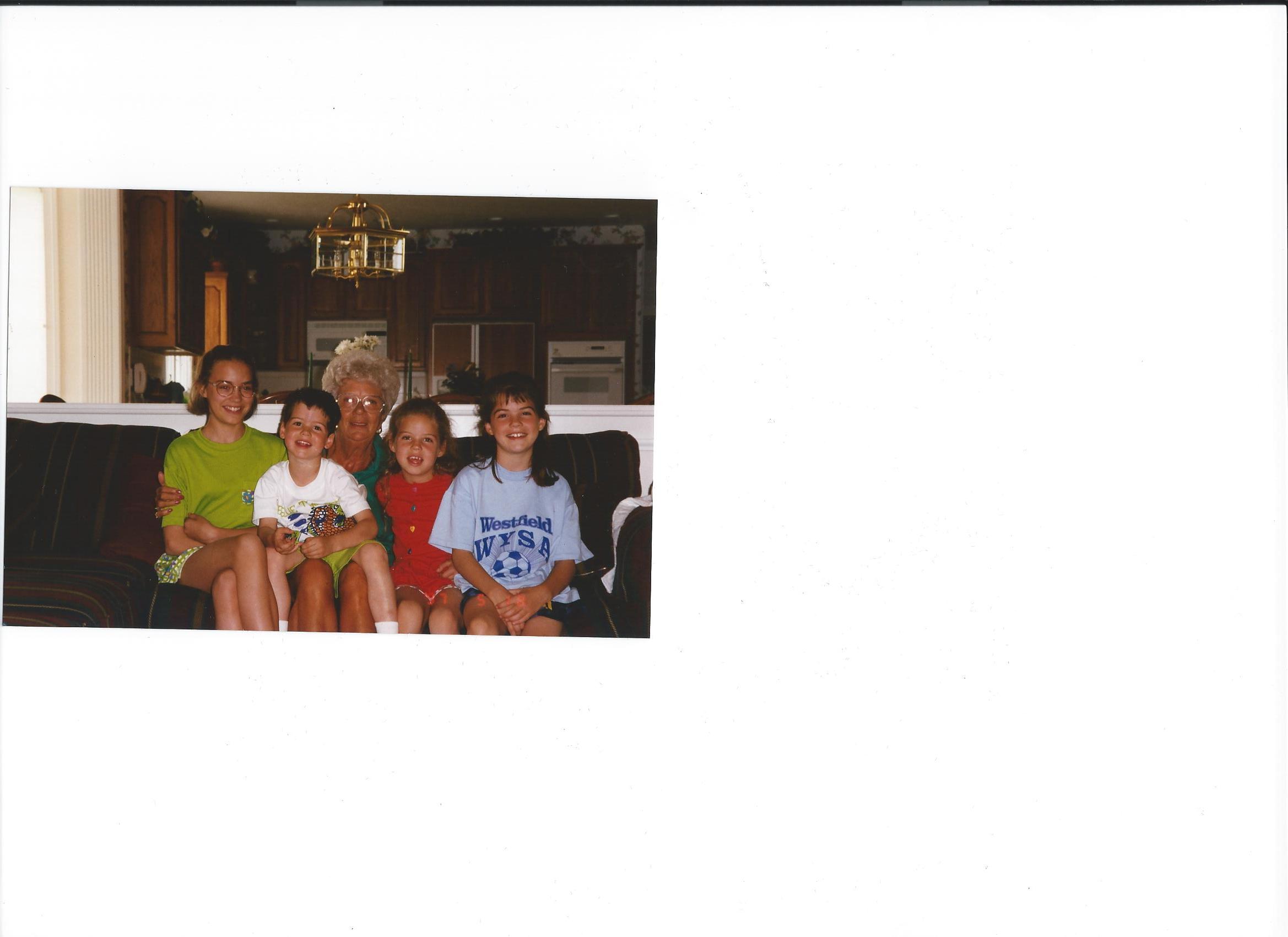
- “What children need most are the essentials that grandparents provide in abundance. They give unconditional love, kindness, patience, humor, comfort, lessons in life. And, most importantly, cookies.” – Rudolph Giulian


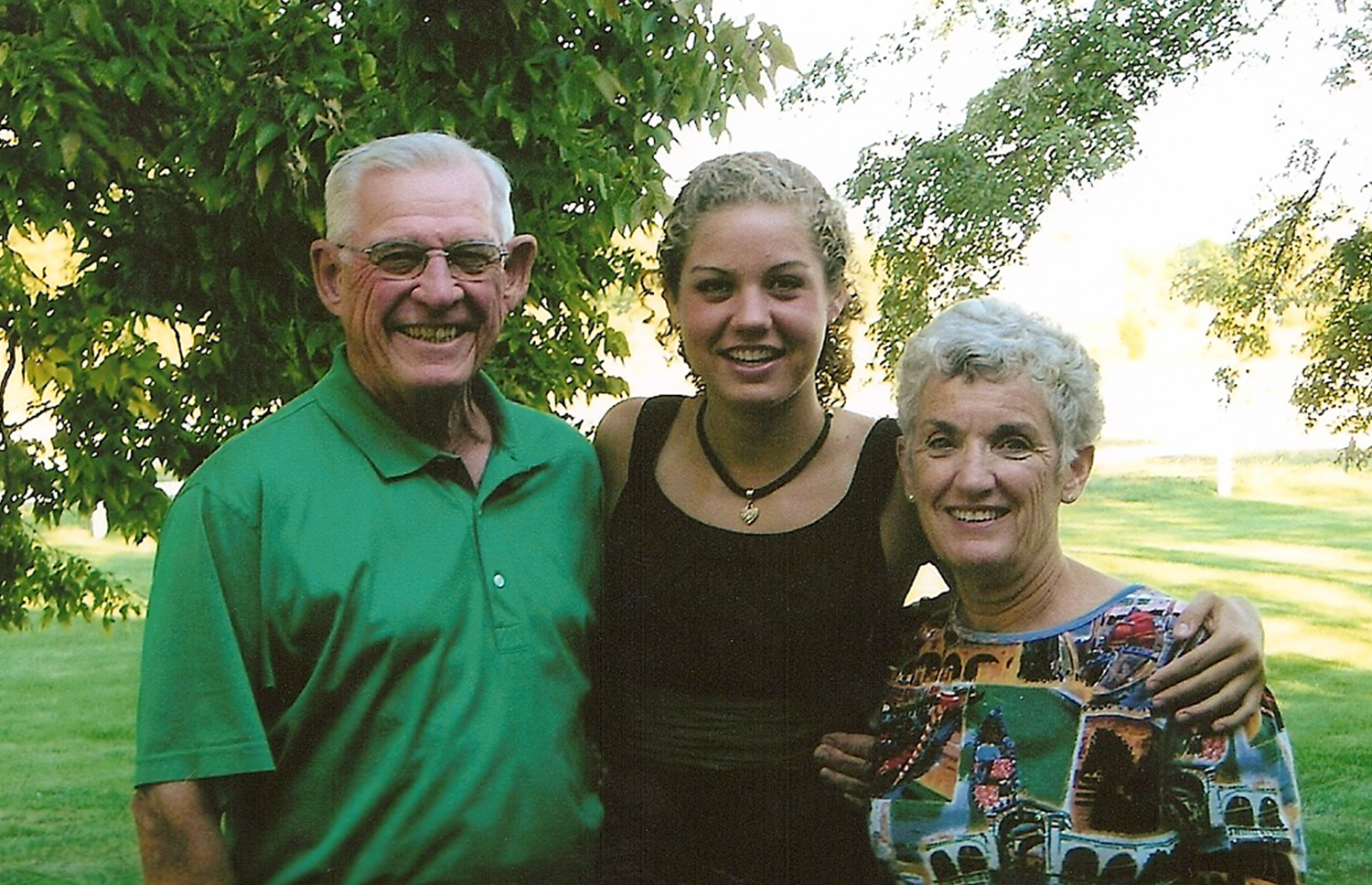
Relationships with grandparents are so valuable to children. When nurtured, a relationship between a grandparent and a grandchild can become a very special life long bond. Grandparents should not step on a parent’s role as the primary authority figure, but assume the role of providing unconditional love, hugs, fun, and support. I believe that parents really need to invite grandparents to be a part of their children’s lives. Grandparents also need to be willing to be involved in their grandchild’s life. When the relationship is embraced by all, the value is multifaceted.
- Grandparents can provide a little loving indulgence to your child. There is something special and exciting for a child to receive a treat like a package of M &Ms, to be allowed to stay up a little later, or to get a little special attention all to themself from a grandparent. Grandparents really can’t “spoil” a child, because usually their indulgences are for a short time. Children who get daily indulgences from parents are more at risk of being “spoiled”. That little bit of special attention and treats from a grandparent is just so special to a child.
- Grandparents are living historians for your child. Hearing stories about the lives of grandparents when growing up, and stories about the child’s parents when they were young give a child a real feeling of connection to the family in a very special way. What fun for a child to hear about life before cell phones, or picturing their Mom or Dad at their age!
- Grandparents are cheerleaders. Grandparents usually see the positive in their grandchild. Most of the time, a grandchild can do no wrong in a grandparent’s eyes. What a special gift for a child to have a constant cheerleader in their life. Grandparents love their grandchildren for who they are, not how they perform.
- Grandparents are special friends. Because a grandparent usually is not responsible for day to day care and discipline, they can become the “fun friend”, and confidant for their grandchild. Because of a grandparent’s life experience, they can provide a bit of balance to a grandchild who may be upset. They provide a safe place for children when they sometimes can’t talk to a parent. They are another safe adult in a child’s life.
- Grandparents provide special fun. Grandparents are often more relaxed and lenient than a parent…which is not a bad thing!
- Grandparents are wise. Never underestimate the value of wisdom. I know there have been many changes in parenting over the years, these changes tend to be regarding the “how to” of parenting. The “how to” of starting solid foods, the “how to” of car seats, the “how to” of safe sleep, and the list of new “how tos” goes on. However, there is a piece of wisdom in parenting that never changes, and sometimes it takes a parent who has “been there, done that” and loves you and your child to impart the wisdom needed in a parenting situation.
- Grandparents teach the value of senior citizens. Children need to learn the unique gifts which people with some gray hair can share with them and remember that the love and care you show to your own parents, will teach your children how to love and care for you in the future.
I know for some it is an impossibility for you to have a healthy relationships with your parents. A parent should never place their child with anyone who would be at risk of harming them physically or emotionally. There are also those of us whose parents are no longer with us, and our children will not meet their grandparents except through the sharing of stories about their lives. In either case, “grandparents” can be adopted and loved. There are many older people who need a young child in their life as much as the young child needs them. Search out a relationship with another older “grandparent”. Intergenerational relationships have such value.
Foster those relationships with grandparents. Make an effort to share everyday news and happenings with them. Encourage your child to talk on the phone, send pictures, and go on outings with Grandma and Grandpa. Relationships that are encouraged and fostered result in a priceless relationship between a grandchild and a grandparent. Our children have special memories of Brad’s parents, and continue to build memories with mine. What a gift, a priceless gift!
Take a breath, enjoy the joyful moments of each day, and remember you don’t have to be perfect to be the perfect parent.
Cindy
Friday is here!

Spend some time doing what “fills your pitcher” today!
What will you do with your Friday? I have some plans…it may not sound fun to many of you, but I am looking forward to it! I like order, ask my kids and they will claim I am a bit compulsive at times! The fact is, when my house is in disarray, so am I! I have been gone a lot this week, so today I plan to be home this afternoon and provide myself with a little “therapy” on my terms.
I can’t wait to run a dust cloth over some tables, pick up the clutter and shine a few sinks. I love to put things back in order and sit and admire for a few minutes, maybe even look through a magazine. Sound crazy? It might be. But, I have found that there are certain things in my life that I need to do occasionally to “fill my pitcher”. You have them too. To be a good parent, you must “fill yourself back up” in order to continue to give to your family. Find out those activities that make you feel good, and build them into your week. I promise if you take care of yourself, you will be better able to take care of your children and really enjoy it. So, stop and think…what do you need today? A few minutes to read? Time for a long shower or bath? A walk through Target by yourself? Some time to work on a hobby? Time for a run or a bike ride? You deserve time to “fill your pitcher”.
After my house is in order, I am looking forward to spending some time with my husband. After all it is Friday…and that means pizza and a glass of wine at my house! And, tonight that pizza and wine will be served in a house that is organized and clean! What will you do with your Friday? Share with us!
Take a breath, enjoy the joyful moments of each day, and remember you don’t have to be perfect to be the perfect parent.
Cindy
So it is a little cold…get outside anyway!

The weather outside is frightful….well at least cold! Looks like we will be having a winter with more snow and cold than we did last year. I am a fan of snow, and even cold weather, it makes me appreciate the spring. I am not a fan of feeling cooped up, and I remember those days when the walls seemed to close in when we had four little kids inside all day long! (kid cabin fever) Even on cold days, children need fresh air and exercise. There are very few days during the winter months when it is absolutely too cold for your child to be outside, and it is good for you to be out in the fresh air too! Winter illnesses are more frequent in families that stay cooped up and don’t get out in the fresh air. Cold winter air does NOT increase your child’s risk for colds or flu! So take a few precautions, and then get outside and enjoy the winter weather. Summer will be here soon enough, and then we will be asking if it is too hot to be out! 🙂
- The winter sun can cause sunburn! Especially when there is a blanket of snow, the sun will reflect off the snow and ice resulting in sunburn on exposed skin. My kids had very little exposed skin when they were out playing, just little eyes peeking out of hats and scarves…but sunscreen on those little exposed cheeks is a good idea.
- Winter weather can also cause chapped little cheeks and lips. Think about using some Aquaphor cream on your little one’s cheeks to prevent or treat dry chapped skin. Lip balm with an SPF of at least 15 is a good idea too.
- Dress in layers. Moisture-wicking clothes for the first layer is a good idea. Children can work up a sweat walking in the snow and building those snowmen! When children perspire they will chill and become cold quickly. Make sure that heads are covered, fingers have mittens (mittens are warmer than gloves), toes have layered warm socks and boots and your child has very little exposed skin. (For those older children, be sure they potty BEFORE layering! :)) Be sure that your child can see well, (no scarves or large hoods that block their vision) and that there are no long scarves that can get tangled or caught causing choking when playing and sledding.
- Remember that children often don’t realize when they are cold…they are having too much fun. Monitor the time, and bring your child in to warm up. At the first sign of a shiver or complaint of cold fingers and toes, it is time to head inside! A cup of hot chocolate is a great way to get them back inside when it is time.
- Be sure that the sledding hill is safe. Make sure the hill is clear of trees and obstacles, there is no water near the end of the slope, and that sledders are being smart and safe. Helmets are recommended for children who are sledding and skiing.
- Be creative, build that snowman, hike and see the beauty of winter nature, feed the birds, look for animal prints, take a spray bottle of food coloring and water and “paint” the snow, and enjoy the season of winter. Trust me, everyone is happier and sleeps better when we have had a bit of fresh air, exercise, and a little winter sun!
Take a breath, enjoy the joyful moments of each day, and remember you don’t have to be perfect to be the perfect parent.
Cindy
Even adults need moments of play! TGIF!

TGIF! My favorite day of the week is here again. I am looking forward to “playing” a bit this weekend. Even with being an “empty nester” my days get filled with “have to’s”; so a little play time sounds wonderful. I will probably sleep a bit later, savor my morning coffee a bit longer, breathe in the fall air a bit deeper, spend some time outside, and choose not to check work e-mails. I will celebrate a special birthday with my brother-in-law and I am sure have Sunday dinner with at least a couple of my children. Sounds like a great end to this week and a great start to next week! Everyone deserves play time; kids and Moms and Dads too. So, put some of the “have to’s” away for the weekend…(I know you still have to feed the kids) :), but hide some of the non essential “to do” list. Out of sight, out of mind, right? Take time to have some fun. Think of 3 things to do this weekend…one for yourself that might “refill your pitcher” so you have something left to give, something to do with your husband so you can reconnect, and something fun to do with your child that breaks up the ordinary. These might be just small changes for the weekend like a post-it love note, a lunch surprise, a candle at dinner, a family walk or outing, a half hour of reading, a long bath…..but these simple changes will help you to reconnect, refill, recharge and enjoy the moment.
Now, celebrate Friday. Even adults deserve some play time. Remember, moments of “play” make life so much more fun. Don’t allow another day to go by without having a moment to “play” yourself…life is too short…TGIF!
Take a breath, enjoy the joyful moments of each day, and remember you don’t have to be perfect to be the perfect parent.
Cindy
Minor bumps, bruises, cuts and scrapes of childhood!

You can’t wrap ’em in bubble wrap…bumps, scrapes, cuts and bruises are part of childhood!
Childhood is usually full of bumps, scrapes, cuts and bruises! Most of these are minor injuries, but knowing how to take care of the minor injuries and when to call your health care provider is a parental must. When I see blood on my child, I always have a moment of “Oh No!” it is hard to prevent that initial Mommy reaction. Keeping yourself calm is important, your fear is frightening to a child. So, when you hear that “hurt child cry”, take a deep breath and then respond as calmly as you can. Knowing what to do brings a sense of calm…so be prepared.
Bruises
Bruises are very common in children, and many times you don’t even know where they come from. Bruises usually are not serious. Placing cool compresses on a bump or bruise immediately will help with swelling and pain. Always protect your child’s skin by not placing an ice pack directly on the skin. Cool wash cloths, ice packs and my favorite, a frozen bag of peas works great! Bruises below the knees are very common in children, investigate a bit if you are seeing many bruises on other areas of your child’s body.
Scrapes
Skinned knees and elbows just happen, and they do hurt! I have seen many bloody knees and dirty tear-stained faces after falls on the sidewalk. Give your little one reassurance and bring them inside for a little TLC. Rinse the scrapes with clean running water to remove dirt, grime and germs. Sometimes I found the easiest way to do that is to put them in the bath for a bit and let them calm down and play. I have even resorted to a Popsicle in the tub so they would relax and let their knees or elbows soak. Apply a little antibiotic ointment to the scrape and cover with a clean bandage.
Cuts
Cuts often bleed quite a bit. Put direct pressure on a cut and stop the bleeding so you can take a good look at the injury. Rinse it clean with running water. If the cut is not deep, wash it with soap and water, apply antibiotic ointment and cover with a clean bandage. If the cut gaps open after you pinch it closed or it does not stop bleeding, stitches may be needed. For severe bleeding continue direct pressure with a clean cloth and call 911.
Wrapping your child in bubble wrap just doesn’t work, so we parents have to learn how to respond calmly to the many minor injuries of childhood, and unfortunately some injuries that could be more severe. For most of the injuries of childhood, a few extra kisses and hugs, a Popsicle and a favorite bandage will do the trick…along with a deep breath from Mom!
Check back this week for more first aid tips for common childhood injuries!
Take a breath, enjoy the joyful moments of each day, and remember you don’t have to be perfect to be the perfect parent.
Cindy
 raisingkidswithlove