When Mom ain’t happy….then no one is happy!

When Mom ain’t happy…no one is happy. We have all heard that saying and in actuality it has a lot of truth to it. If Moms are unhappy, then their families suffer. Moms that are stressed have less patience with their spouses and children and have less fun and engagement with their family. Families benefit when Mom feels good! So lose the guilt and do something for yourself….after all you are helping your family!
How do we do it?
1. Balance
A Mom who is out of balance probably has too much on her plate. There must be a balance between kids, work, and the home. Everyone needs 15 minutes a day of time alone. I am an early riser and that is my time for a few minutes of reflection before my day begins. Find out when you can fit those 15 minutes in your day to balance yourself. Then during that time, reflect on your day and decide your priorities and put some perspective to those priorities. Always ask yourself, “Is this a have to…and what would happen if I didn’t?” Suddenly your life will become a little more balanced by embracing what is most important during this particular season of your life. Remember, there is a time for everything in life. You can have it all, just not all at once!
2. Delegation without guilt.
Ask for help and then allow your kids and your spouse to help without guilt. Build chores into your child’s daily life, giving responsibility helps your child build self-confidence. Ask for help from your spouse and be happy with the help you receive! Remember you must ask not just wish for help! Give Dad a job to own, and let him do it his way! Moms who are “gatekeepers” for their baby discourage Dads from parenting. You don’t have to do it all….if you try everyone will be unhappy!
3. Carve out time creatively.
Moms can actually carve time out for themselves right in the middle of caring for their kids! You need to learn to be ready to grab those minutes here and there throughout the day. Bring that magazine or book and read it in carpool, or waiting for a sports practice to be over. Listen to a podcast or music that YOU enjoy when you are running errands with the kids in the car. Build some exercise into your day when you take the kids to the park. Soak those feet in the tub while your kids play in the tub and give yourself an at home pedicure. Find ways to take care of yourself while still caring for your kids! It is important for your children to see that you value yourself, that builds their respect for you. Don’t give up who you are when you become a Mom! You can still keep your interests, a Mom is a big part of who you are, but not the ONLY part of who you are!
4. Plan a monthly date with your spouse and a date for you alone.
Reconnect with your spouse at least once a month on a “grown up” date. Keep it simple and keep it cheap but it must be time away without kids. The rule is: No talking about the kids, just talking with each other. This will allow you to connect with each other! Set a date once a month for you too…this can be a Saturday of shopping, time for a haircut, nails, a walk in the park, time to take a class whatever you alone would like to do. Get both of these dates on the calendar…make it a standing date. Treat it just like an appointment, no cancellation allowed! You must refill yourself in order to give of yourself!
Remember…if Mom ain’t happy….then no one is! Give your kids a gift; take care of yourself so you can take care of them. Keep the family happy! Happy Mother’s Day to all of you great Moms!
Take a breath, enjoy the joyful moments of each day, and remember you don’t have to be perfect to be the perfect parent.
Cindy

Sippy cups are temporary!

Sippy cups serve a purpose….temporarily! Introduce a cup at 6 months of age, and the sippy cup should be transitioned to a straw cup about 7 or 8 months and a lidless cup by age 2.
There have been so many new baby product developments over the years…some very good, some not so much. The sippy cup is one that has really changed over the last 20 years or so. I can remember when the only choice for a sippy cup was the bright-colored Tupperware cups with lids! Now you can go into Target or Wal-mart, or most any other store and search aisles and aisles of different sippy cups. Ones with soft nipples, ones with hard spouts, ones that have handles, ones that have straws, character cups, valveless cups, disposable cups……you get what I am saying. It would take most of us an afternoon and a small fortune to try to find the “best” cup for a child.
Sippy cups should be introduced to your baby when your baby starts solid foods. With a solid food meal, your baby should try a few sips of tap water. Much of the water will dribble down your child’s chin at first, but drinking from a cup is just like any other developmental task, it takes practice. Sippy cups were meant to be transitional cups. That means temporary! Every day I see children aged 3, 4 and sometimes as old as 5 with sippy cups! Drinking from a lidless cup is a developmental milestone that is important! Children should be able to drink from a lidless cup with very few spills by age 3. Here are a few tips on picking the best sippy cup, and why transitioning from it to a lidless cup is so important!
1. Pick a sippy cup that has a hard spout that is NOT like a bottle. Your child should be learning how to drink from a cup, not learning how to drink from a cup that looks and acts like a bottle! Start using the sippy cup when your baby starts solid foods. Start with water, and eventually put breast milk or formula in the cup, so your child learns that milk can come from something other than the breast or bottle. The American Academy of Pediatrics recommends that babies are no longer drinking from a bottle by about a year.
2. Pick a sippy cup that does not have a valve, or that has a valve you can remove. Once again, your child is learning a new skill…sucking is old hat! Your child needs to learn how to drink and control the flow of a liquid without sucking.
3. Do not allow your child to drink juice or milk from a sippy cup all day long. Your child will continually coat his or her teeth and promote decay, and will drink too many calories! Water during the day, milk with meals, juice ( no more than about 4-6 ounces maximum a day) only occasionally. The sippy cup will quickly become a comfort item like a pacifier or a bottle if your child carries it around all day.
4. Encourage lidless cups at meals by a year. Children who continue to suck on a sippy cup could end up with speech difficulties. Sucking for too long can cause the mouth and oral muscles to develop poorly resulting in speech problems.
5. Transition to a straw cup. The introduction of a straw cup protects your child’s teeth when drinking fluids with a high sugar content. The sucking motion on a straw also is different from the sucking motion on a sippy cup. The tongue is placed differently when using a straw cup which prevents the poor muscle development in the mouth that comes with prolonged sucking on a bottle, sippy cup, pacifier, or thumb.
6. Give up that sippy cup by age 3. Children are developmentally ready for a lidless cup by age 3 if they have been given the opportunity to learn how to use it! A good place to practice is in the bathtub…no worries if there are spills there!
So parents, let go of that sippy cup! Allow your child to learn how to drink with a lidless cup. Their teeth and their speech will thank you. Relax, there will be a few spills, but there is no reason to cry over spilled milk! 🙂
Take a breath, enjoy the joyful moments of each day, and remember you don’t have to be perfect to be the perfect parent.
Cindy

Picky Toddler Eating
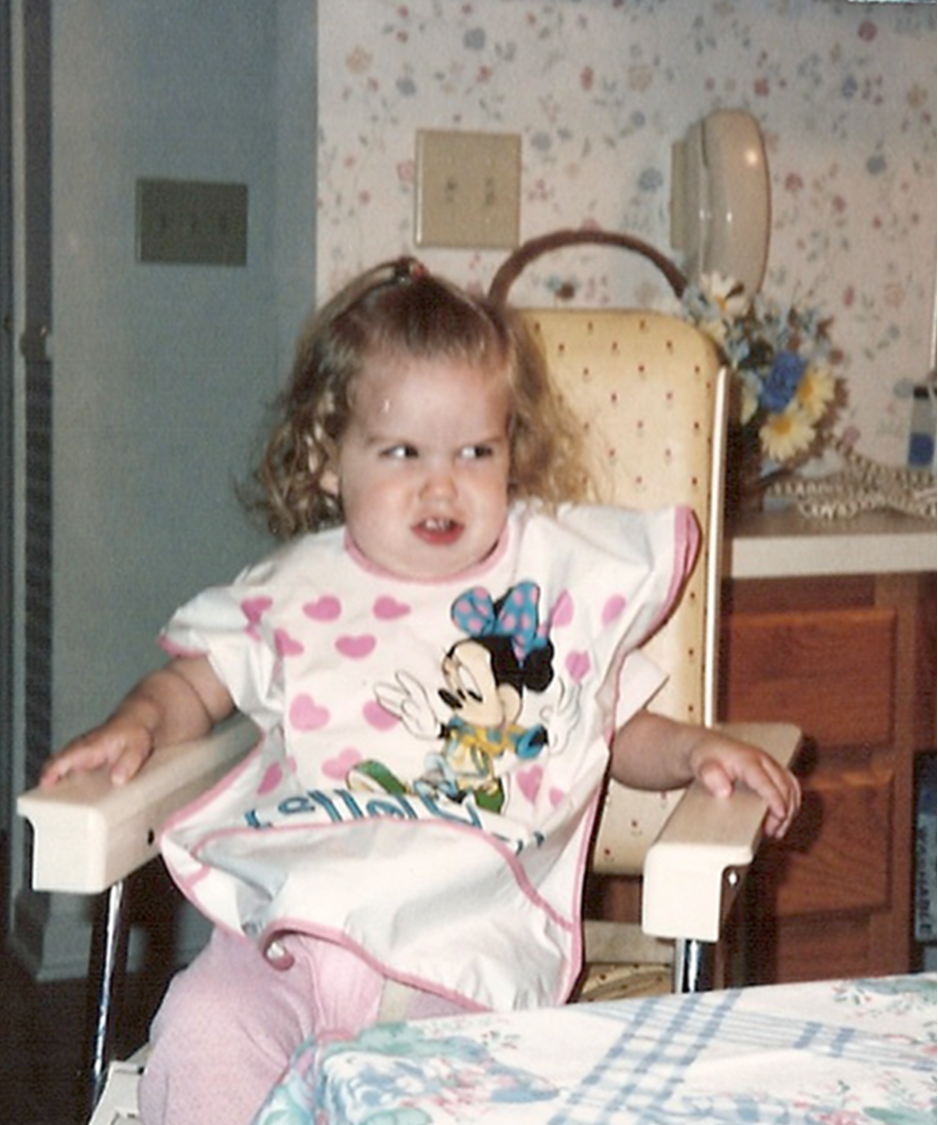
Our daughter, Kaitlyn, the picture of toddler pickiness!
Why is it that we parents worry so much about how much our child is eating? I can remember thinking that how well Kaitlyn ate that day, determined how well I had parented. Not true! Children under the age of one usually nurse or formula feed well, and are eager for the introduction of solid foods. But seemingly over night, our toddlers start to have an opinion about what we feed them! I can remember being very frustrated because I was providing her with this wonderfully healthy meal, and often all she wanted was bananas! To make it more confusing, the next day she may have thrown all those bananas off her tray! My darling daughter was a typical toddler, and with toddlers, meals are often a challenge. Why?
- Toddlers have slowed down in growth.
- The first year of life a child grows very quickly, between birth and a year most children triple their birth weight! A toddler grows much more slowly and seems less hungry.
2. Eating interrupts a toddler’s activity.
- Toddlers are busy…any parent can tell you that. Sitting for any length of time just isn’t on the toddler’s agenda!
3. You can’t force a toddler to eat.
- A parent’s job is to present a toddler with a wide taste pallet of healthy foods every day. It is up to the child to eat them! The more you force, the more most toddlers turn up their noses. A healthy child offered healthy food will NOT starve themself! A parent’s job is to provide a healthy diet a toddler’s job is to decide!
4. Toddlers usually eat one good meal a day.
- Often toddlers will eat a good breakfast, an OK lunch and pick at dinner. Toddlers only need about 40 calories an inch. (Now don’t get that calculator out for your child!) Most will only need about 1000 to 1300 calories a day. By dinner, many toddlers have eaten their required calories for the day!
5. Toddlers like to binge on one food.
- Food jags are common in toddlers. One day you can’t fill them up on green beans, and then two days later it is bananas. Some days a toddler may eat only fruit, the next day they may fill up on protein. What a toddler eats over a week is a better picture of their diet intake.
So what is a parent to do….
- Relax!
- Offer food frequently! Toddlers need 3 meals and at least 2 snacks offered each day. Toddlers behave better when they are eating frequently. Their tummies are small and temper tantrums increase when blood sugars are low. Try planning snacks from at least 2 food groups 2 to 3 times a day.
- Dip it! Toddlers like to dip everything. It is fun, and it is messy…two essentials for toddler eating! Humus, yogurt, cottage cheese, guacamole, melted cheese, salsa, peanut butter and even ranch dressing are some essential dips for toddlers.
- Hide it! Hide the broccoli under cheese sauce, shred the veggies and mix them in humus or cream cheese and spread on a tortilla and cut into pin wheels, puree veggies and add them to pasta sauce, lasagna, meatloaf. Make “orange ” pancakes with sweet potato puree or carrot puree and a dash of cinnamon. Get sneaky! When you hide vegetables, make sure you include some on your child’s plate so they learn what a balanced diet looks like.
- Be creative! Kids like fun. Make faces on sandwiches, use cookie cutters and cut shapes in pancakes and bread, make shish-ka-bobs with fruit and pretzel sticks, make party bananas with sprinkles, serve fruit and yogurt in an ice cream cone, try smoothies, try serving foods in bento boxes
- Remember the toddler serving size! A serving size is a tablespoon per year. One serving of vegetables for a 2-year-old is two tablespoons! Many times we are trying to serve our toddlers adult size portions! The American Academy of Pediatrics has a great “sample” daily meal plan. Take a look!
- Don’t let your toddler “drink” his calories. A toddler should only have 16 ounces to a maximum of 24 ounces of milk a day. That is much less than the 28 to 32 ounces most were drinking before becoming toddlers! If your child drinks too much cow’s milk, he will not eat solid food calories! Too much milk provides too little iron and other needed nutrients! Juice should be limited to only 4 to 6 ounces a day after age 1, better to have the whole fruit than just the juice!
- Let your child “shop” for food. Give your child a few dollars and let them “shop” in the produce section. Your child will be more likely to eat the food he or she “buys”! You might learn to cook and eat a new fruit or vegetable too….you never know what your child may pick out! (this is how I learned to fix spaghetti squash!)
- Let your child “help” prepare food. A child who watches a parent make dinner and “helps” will often be more likely to eat! Let your child have a few choices, control is important for toddlers.
- Let your child be messy. Toddlers explore food with their mouths, taste buds, and hands. They smash food, throw food, spread food, “paint” with food and generally need a bath after most meals. You must allow your toddler to feed himself. You must introduce spoons and forks, and be patient with the fact that it takes time and messes to learn how to use them!
- Don’t battle…try a “No thank you bite”or “kiss me bite”. Toddlers have opinions, and sometimes they are very strong! The more battle there is in a meal, the more likely you will lose! Offer healthy foods and a variety of foods. If your toddler refuses to try something, introduce a “no thank you bite”. One bite and then he can refuse more. You might even ask your child to “kiss” the food, not even take a bite. This may provide just a small enough taste to convince your child to take a bite! Remember, it takes 15 to 20 introductions to a food before your child will develop a definite like or dislike!
Remember, a parent’s job is to PROVIDE healthy meals and snacks….a toddler’s job is to DECIDE what he or she will eat that day. If left alone, toddlers will usually balance their own diet if we just provide good choices. Relax….
Take a breath, enjoy the joyful moments of each day, and remember you don’t have to be perfect to be the perfect parent.
Cindy
Helpful Websites:
Is it time to ditch the diapers?

I think she had to go! 🙂
There are definitely parts of parenting that I like less than others. I know when potty training time rolled around for each of the kids, it was one of those moments when a crazy thought like, “How bad would it be to skip this?” would cross my mind. The next time that thought would cross my mind would be around 3rd grade when it was time to memorize multiplication tables! But, I made it through potty training with all 4 kids and all 4 of them know their times tables….so I guess I can add those to my parenting successes list!
When is a child ready for the big step of potty training? The average age of potty training has slowly creeped up to around age 3. I think there are a couple of reasons for this. One, we are very busy families. Families are on the go, and routines are busy. Potty training takes some consistent effort and time, many times it is hard to find consistent time at home near a potty! The other big reason I feel that potty training is later is disposable diapers. Disposables wick “pee” so well from the skin, that it is difficult for a child to even know when he or she is wet! Disposable diapers and disposable training pants are being made larger and larger, so the need to potty train becomes later and later.
Using the potty is a huge accomplishment! It is a very complex achievement. First a child has to be aware of the sensations of a full bowel and bladder. Next the child learns that these feelings result in a “pee” and a “poop”. The child then must learn how to remove clothes, sit on a potty and hold the pee and poop until he is ready to go, and then finally release those muscles necessary to let the pee and poop come out! No wonder it is such a task to learn!!
Potty training is a learning process not a disciplinary process, there should never be a punishment connected to using the bathroom. I don’t believe that most children can be trained in just a few days! Your child has to understand what you want, and how to do it. They have to understand their body sensations, learn to constrict sphincter muscles, and then relax those muscles to potty. Children also must be motivated and want to please you. If your child is showing an interest in imitating it is a good time to start.
Children will not potty train on their own. Parents must wait until their child is developmentally ready—have patience with the process, but also must initiate it. Children will not just wake up potty trained one morning! Children need the guidance and patience of parents to learn to use the potty and eventually gain control of their “pee” and “poop”.
So is your child ready for the big step? Most children have the muscle control to potty train between 18 months and 3 years of age. Here are a few things to look for when deciding if you both are ready to tackle this process:
- Is your child aware of the need to go? Does your child tell you or do you see a change in facial expression? Does your child hide to have a bowel movement?
- Can your child say or sign words such as wet, dry, potty and go?
- Is your child demonstrating imitative behavior?
- Does your child dislike wet or dirty diapers?
- Is your child able to stay dry for at least 2 hours or wake up dry after a nap?
- Is your child able to pull elastic waist pants up and down?
- Is your child anxious to please you?
- Has your child asked to use the potty?
- Make sure there is not a stressful situation in your life such as weaning, birth of a new baby, change in childcare etc. Wait 4 to 6 weeks after the stressful situation before beginning.
Pre potty training or getting ready!
If your child is 18 months or older…you can begin with these steps so you are ready when your child shows signs of readiness too!
- Name urine and bowel movements. Describe what your child has done using the words you have chosen. There are no “perfect” words, call it what it is! 🙂 My husband wasn’t thrilled when I was telling our son to “tinkle”, be sure you both agree and are consistent! When you see your child begin to have a bowel movement or urinate, describe what he or she is doing. “Go potty”—say this as you see signs your child is pooping or peeing. Describing to your child that they should pee or poop when they feel the pressure, helps to define to them what it is you want them to eventually do on the potty.
- Let your child watch you use the toilet. This will get your child interested and show them what that toilet is for! Gone are your days of privacy!!
- Change your child’s diaper as soon as it is wet or dirty to prevent your child becoming comfortable with the feel.
- Drop the poop into the toilet with your child watching. Encourage your child to help flush the toilet. This will also show your child what goes in the toilet! Flushing is usually very exciting too!
- Purchase a potty chair. You can line the receptacle with plastic wrap—then you can wrap up any poop or pee and dispose of it easily with very little clean up. Or, you can purchase a seat that fits on the adult toilet. I have used both but preferred the latter, much easier with clean up. If you use the seat that fits on the adult toilet, be sure that your child has a stool to put his or her feet on, it is hard to have a bowel movement with feet dangling! The potty chair can be moved to any place in your home and is better for children that have some fear of the “higher” toilet. See what is best for both of you.
- Allow your child to sit on the potty clothed. Let your child sit dolls or stuffed animals on the potty. This will familiarize your child with the potty slowly. Reward or celebrate when your child sits on the potty.
- Buy a “potty book” or movie to start talking about big children using the potty. Here are some cute examples…
- Everyone Poops By Taro Gomi
- I Want My Potty By Tony Ross
- My Big Girl Potty By Joanna Cole
- My Big Boy Potty By Joanna Cole
- Once Upon a Potty By Alona Frankel
- The Princess and the Potty By Wendy Cheyette Lewison
- What Do You Do with a Potty? By Marianne Borgardt (a pop up book)
- Have a basket of toys or books that are only used while on the potty. This will make potty time more fun.
So, this is the starting point! Your child is between 18 months and 2 years, you can begin to introduce the concept. When your child starts to exhibit some signs of readiness….the next step is giving it a try! More to come on this tomorrow!
Take a breath, enjoy the joyful moments of each day, and remember you don’t have to be perfect to be the perfect parent.
Cindy
Will preschool help your child be academically successful?
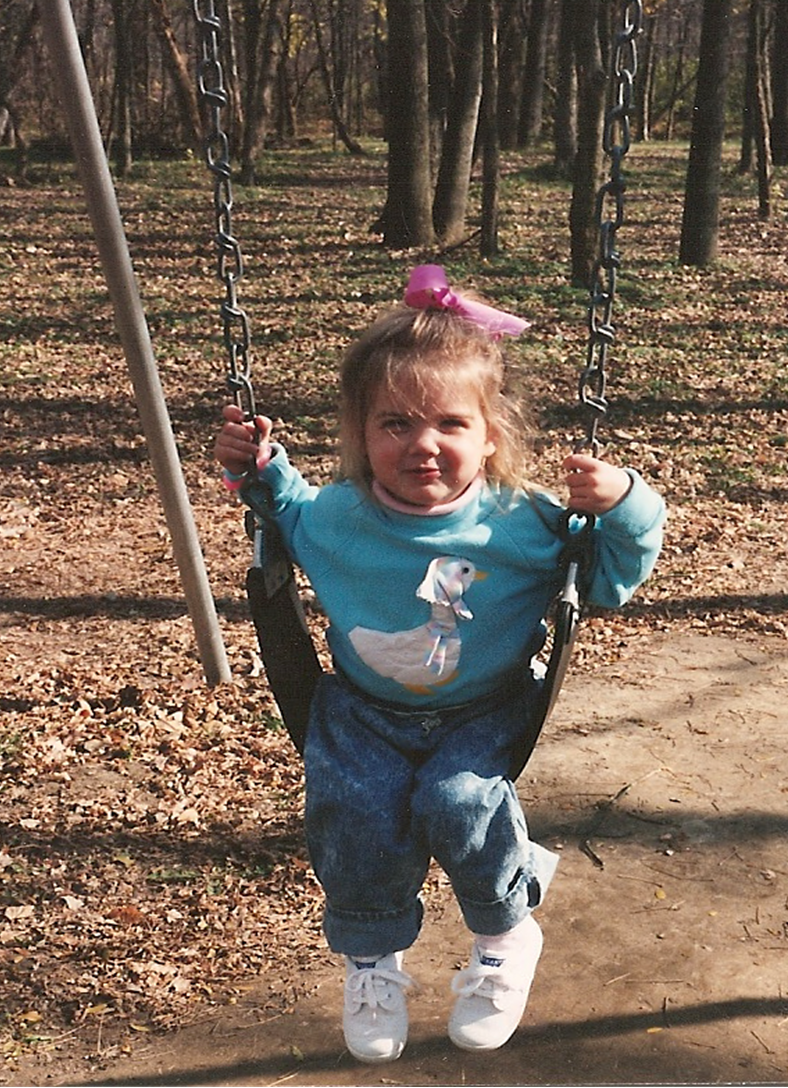
Preparing your child for school success includes outings like this! School readiness is not just about letters and numbers!
It is that time of year when parents are beginning to look at preschools for next year. Sometimes I feel that there is more pressure on parents to find “just the right preschool” than deciding on a college! Preschool is a must for some children, but it is NOT a must for every child. Studies have shown us that children who have engaged parents who read to them and provide various activities at home but don’t attend preschool are not at any academic disadvantage. Some recent studies continue to show us that any academic edge a child may receive from preschool may fade by the 3rd grade.
So, do I think preschool is a waste? Absolutely not, I feel it is very advantageous to those children who have fewer opportunities. I also think that with Kindergarten now being a full day, a year of preschool often helps children adjust to the rigor of school. It has become more necessary for children to have at least one year of preschool to help with the adjustment, prepare the child for following directions, learning to sit still for periods of time, and the general routine of school. However, I do think that the choice of preschool attendance for 2 and 3 year olds from families who are able to provide outings, hands on activities, and reading at home is an option. Many children LOVE their preschool experience, and Moms often enjoy some time to themselves. Children also can learn very valuable social skills and have the opportunity to participate in some play activities that are not always offered at home like finger-painting and other messy play. However, everything that a quality preschool offers can be offered at home by a loving, involved and active parent, if they would like. At times I think parents are sent the message that they are not capable of providing the necessary experiences for their child to develop well and be successful in school. Parents feel inadequate in the task of preparing their preschooler for academic success. This is simply not true. Attending preschool will not insure that a child will be more successful in school and unfortunately will not guarantee admission to Harvard! More important than letters and numbers, a preschooler needs to develop life skills, social skills, self-confidence, and emotional maturity to be successful in school. To help with success in kindergarten, a child needs these basics:
- Good physical health so their natural abilities can grow and mature.
- Appropriate emotional maturity and self-confidence so they can accept new challenges.
- Good language skills so they can ask questions and participate in group activities.
- Good social skills so they will be able to share and interact with other children.
- Good listening skills to be able to follow directions.
- Familiarity with letters, letter sounds and numbers.
- The ability to sit still for short periods of time.
We are finding that a child does not need a structured academic program in a preschool; he or she needs the opportunity to develop social and emotional skills. Children who do not have that opportunity at home will benefit from a preschool program.
Young children learn best through playing, exploring, and discovering. Imaginative play will actually improve high level thinking which improves a child’s chances of school success. Forcing pencil and paper academics and academic drills too early might actually decrease a child’s natural desire to explore and learn!
What makes a good preschool?
- A preschool should be convenient for parents! If it causes stress to get to school because of location or time of day, it will not be worth it to you or your child.
- Children should be active in the classroom playing and/or working in groups or stations.
- There should be hands-on materials and activities available. Pretend play items; dress up clothes, water play, easels, painting, clay etc.
- Children should have individual time and group time with the teachers. There should be 1 adult/teacher for every 4 to 5 children.
- Children should have their work displayed in the classroom…and it should not all look the same! Children should have the opportunity to be creative with projects.
- The learning of numbers and letters should be embedded in activities throughout the day, not in concentrated lessons or drills.
- There should be outside play daily (weather permitting).
- There should be a developed curriculum that provides some structure to the day.
- Teachers should have an Early Child Development background/education.
- There should be a stable teaching staff with little turnover.
- Music should be incorporated into the curriculum.
- Daily life skills should be incorporated into the curriculum like buttoning, shoe tying, putting on jackets, picking up toys, sitting for short periods to listen and following directions.
- There should be opportunity for children to socialize in play with other children freely learning sharing, taking turns, and other social skills.
- Children should be read to in groups and individually.
- “Field trips” to experience the world should be included in the curriculum. Trips to apple orchards, parks, the zoo, nature centers and other community destinations are important.
What can you do at home?
- Provide time for imaginative play. Be sure that you have toys that encourage creativity and imagination.
- Provide time to use paint, clay, scissors, crayons, chalk, water play, and other tactile fine motor play.
- Provide outdoor play daily (weather permitting).
- Expose your child to the world by going to the grocery store, post office, library, zoo, park, nature center, apple orchard, pumpkin patch, and other places. Talk about your outings!
- Read daily. Provide books that your child can “read” alone.
- Talk about stories that you read. Ask your child what will happen next! Let your child tell you the story.
- Provide music. Sing songs and dance.
- Point out letters on signs, talk about funny words, find words that rhyme, talk about the sounds that words begin with.
- Point out numbers, count items when playing, incorporate counting into everyday life.
- Have a routine at home; following routines will help when your child has structure and routine at school.
- Allow your child to dress himself. Practice buttoning, shoe tying, independently going to the bathroom, hand washing, and other independent life skills.
- Give your child directions to follow. Start with one step directions and then move to two steps, and three and four step directions.
- Give your child developmentally appropriate chores or responsibilities. (Pick up toys, carry dishes to the sink, put dirty clothes in the hamper etc.)
- Provide sorting and sequencing opportunities. Use a muffin tin for your child to sort different cereal, colored pompoms, letters, or other items. Let your child help you sort socks!
- Help your child recognize his or her name in print.
- Talk about shapes your child may see around the house or outdoors.
- Provide opportunities for your child to play with children his or her own age.
We all want our children to be successful in school. I believe however that the most important skills our preschool aged children need are not academic but social. Children are very pliable; we can teach a child to do many things at a very young age. We can teach a 2-year-old to recite numbers and letters, and we can even teach many 4 year olds to read….but I question at what cost? Will our children develop those skills that are truly needed for success in school? The skills that will allow him or her to problem solve, interact socially in a respectful and appropriate manner, follow directions and listen, and think with innovation and creativity; those are what are most important. So whether your child is in preschool or at home, be sure you are opening up the world to him or her, not pressuring academics too early and then your child just might end up heading to Harvard! What are your thoughts?
Take a breath, enjoy the joyful moments of each day, and remember you don’t have to be perfect to be the perfect parent.
Cindy
This Valentine’s Day, Commit to 4 Goals….

Commit to your relationships with 4 simple goals…..
Valentine’s Day is just around the corner. Walking into Target, the aisles are full of pink and red and signage promising if you purchase this your Valentine will forever be yours! Yes, Valentine’s Day may be a marketing ploy more than a real day to celebrate love, but it is a great time to stop and think about your relationship at home. Let’s be honest, parenting can be tough. It takes a lot of effort to raise children, and there are points during the child raising process that there just does not seem time for anything else! But the fact is, time spent on your relationship with each other is vitally important for your happiness and your child’s. So often the blessing of children results in both parents totally concentrating on their children and not putting any effort into their relationship with each other. I was guilty of this at times. When our four children were younger, I can remember times when the only conversation I had with my husband revolved around if we had enough milk and who was driving to the next sporting event! Not a whole lot of romance there….but more importantly not a whole lot of relationship building. A relationship will not stay healthy for 18 years if there is only effort put forth on raising your child! So as Valentine’s Day approaches, take a moment and thing about investing in each other……a few thoughts to get the process going….
One of the best pieces of advice I ever read was from a book Creative Counterpart. Over the years I have put this philosophy to work, recommitting to this over and over again when life became unbalanced.
Set four goals each day.
- One goal should be for you. Something that you will do that day to “fill yourself up.” Remember an empty pitcher cannot give anything. Some days that might be 30 minutes of reading, maybe time to reflect, maybe a run, or possibly a big bowl of ice cream and chocolate! Something for yourself.
- A second goal should be for your husband. Not something for him to DO, but something you do for him. I call it every day intimacy…this might be concentrating that day on giving a compliment or two, maybe leaving a post-it love note, an extra kiss or cuddle for no reason…something to build relationship. Did you thank your partner for bringing home milk or folding the laundry? Have you told your partner that he still makes your heart go pitter patter? When was the last time you cuddled on the couch? Have you asked each other how you are? What about a 60 second hug….can you do it? Can you have a conversation that doesn’t include your child? Can you plan a date night at home? Get creative! Physical intimacy follows every day intimacy…..the every day niceness between two people who care about each other.
- A third goal should be for your child. Something little you will do extra with him or her. Maybe you will read an extra story, or you finally will get the finger paints out, or bake cookies, or just a few minutes of extra cuddle time before bed. Again, these are small goals…nothing crazy like trips to Disney.
- Finally a goal for your home. Kids and life can result in chaos in a home. I am not talking about a goal to wash walls and baseboards, but a small daily goal to control the chaos. Maybe today you will wipe out all the bathroom sinks, tomorrow you will put the laundry away, or maybe you will dust or vacuum one room. These small goals will result in a home that feels more content rather than chaotic.
Those four daily goals will bring balance to your life. Every day kindness will become a habit and some of the negativity that creeps into many relationships when kids become the center of life will be squelched. Take time to remember why you fell in love.
Recommit to living your life and not being dragged along for the ride. Fill yourself up, give to your relationships, and take a bit of control in your home. Now fold to the pressure and go buy Valentines for your special someones…everyone needs to be reminded that they are loved.
Take a breath, enjoy the joyful moments of each day, and remember you don’t have to be perfect to be the perfect parent.
Cindy
Sleep like a baby…really?

Establishing a calming routine before bed is important!
When I brought our oldest Corri home from the hospital, I thought I knew about the sleep patterns of infants. After all, I had the degrees to prove that I was an “educated” Mom! The truth is, nothing can prepare you for the lack of sleep that new parents usually experience. Quickly my plans to reorganize my closets during Corri’s long daytime naps (don’t newborns sleep all the time?) went by the way side. Yes, newborns DO sleep a lot…just in very short intervals. Corri never slept long enough for any reorganization of closets, and when she did sleep I was too tired to reorganize. Oh, the lessons of a new parent!
Sleep is VERY important for our babies, and for you! There are some sleep tips for new parents that will help your baby “learn” to sleep and establish good patterns for the future. I firmly believe that our children are largely sleep deprived because of our busy schedules. Good sleep is essential for healthy children, clear through the teen years! Many of the healthy sleep habits you establish with your young children will result in healthy sleep habits for a lifetime.
The first 3 months of a baby’s life there is no real routine. Anything that you read that tells you that you can establish or “force” routine at this age is mistaken. I do not think that baby sleep training books are valuable at this age, and they can really be destructive to your baby’s establishment of good sleep habits. Your job as a parent during the first year is to help your baby realize that the world is a great place! When your baby cries, you need to respond. Baby will quickly learn to trust you and feel loved. You cannot spoil a newborn! You CAN spoil an older child, but that discussion is for another day!
Newborn sleep patterns are different from adults. They have sleep cycles that are much shorter than ours, and have longer patterns of active sleep rather than deep sleep, especially in the first 3 months. Parents often complain that their infant will “cat nap” . This is a fairly normal pattern during the first 3 months of life. Very young infants do not know how to self soothe either. Those skills develop after the first 3 months also. Here are a few tips that will help establish good sleep habits for the future. Remember, there is light at the end of the tunnel, life will become easier after the first few months.
1. Know your baby’s sleep cues…do not let your baby become over tired.
Most parents in the beginning have a bit of a difficult time learning sleep cues. Newborn babies should not be up longer than an hour and a half to two hours maximum. If your baby becomes overly tired, it is much more difficult for your baby to sleep! Look for your baby to rub at his or her eyes, begin to blank stare and not engage, yawn, and fuss. When you see some cues, take a look at the length of time your baby has been awake. The next time your baby is awake, start the process of putting him or her down for a nap 15 minutes earlier. This way you never miss the window of opportunity, an overstimulated baby does not sleep well. You often will feel like all you have time for is a feeding, a diaper change, a small amount of interaction and then your baby is ready to sleep again!
2. Swaddle your baby.
Newborns until the end of the 4th month have a reflex that causes them to startle. You often will see your baby twitch, grimace, have a sweet sleep grin and jump during the early active sleep pattern. The twitching and jumping or moro reflex as it is called, will wake your baby. If you swaddle using a light blanket or a swaddle sleep sack, your baby will not wake with a startle as often and will feel more secure. Many moms and dads will tell me their baby does not like the swaddle. I encourage you to try it again. Try swaddling your baby before a nursing or feeding, or before you begin to rock your child to calm. Most of the time babies will relax into the swaddle and love it! They look like a cute baby burrito!
3. Try white noise.
Babies heard white noise inside mom’s womb during the entire pregnancy. This sound is very calming to a newborn. My 2nd daughter loved the sound of a blow dryer. She was a fussy baby, and quickly my blow dryer became part of the decor of my family room. Now, there are white noise machines, white noise phone apps, and white noise CDs that parents swear by, a much better look than the blow dryer! White noise can be part of a “switch” that helps soothe a fussy baby. You might even try getting your face down by your baby’s ear and “shsh shsh shsh”, which will work too.
4. Provide day and night/ light rhythm.
Many newborns get their days and nights mixed up. There is nothing worse than an infant that sleeps well during the day and is up all night! Moms often notice that babies before birth are more active at night too! To help your baby learn the day and night pattern, keep the daytime hours light with normal noise patterns in your home. Light on our eyes helps to cue our bodies to when it is time to be awake and when it is time to be asleep. That is part of the reason we feel so sleepy during the gloom of dark winter days! Stand in front of a window with your baby and expose your baby to natural light. Do not darken the rooms for your baby to nap during the day and keep regular noise in the house. No tip toeing! In the evening, start to dim lights and keep things calm and quiet about an hour before “bedtime”. Then with every nighttime feeding keep the room dark, do not change the diaper unless it is dirty, and do not interact. Just feed your baby and put back to bed. Eventually your baby will learn the difference between day and night and sleep more soundly and longer during the night hours. This pattern of day and night will help older children and adults fall to sleep more easily too!
5. Wake your baby to eat during the day.
Do not let your baby sleep longer than 2 hours during the day. Wake your baby to eat, and unless your doctor advises you differently, never wake a sleeping baby at night! You want your baby to receive most of their nutrition during the waking hours, and less at night.
6. Move with your baby!
Movement will calm a baby to sleep. Rocking, swinging, and wearing your baby will all help lull your little one into a deep sleep pattern. Rocking to sleep is fine in the early months. Many parents have a hard time transitioning from the swing or arms to bed without the baby waking. Do the limp arm test! Remember that babies have a very active sleep pattern before they move into a deep sleep. If you try to transfer when your little one is still grimacing, sleep grinning, or you see rapid eye movement under closed eye lids, most likely your baby will wake quickly. Rock or provide movement until your baby has transitioned from the active sleep pattern to a deep sleep. You will be able to pick up your baby’s arm and feel that it is limp. When you see that, then it is much easier to place your baby in the crib and your baby stay asleep.
7. Use a pacifier.
Babies need to suck many times to sleep soundly. The American Academy of Pediatrics recommends using a pacifier at sleep as a deterrent to SIDS. Sucking calms a baby. A baby that tends to become over stimulated easily often needs more suck time. I am a big believer in the pacifier or a thumb or finger sucker resulting in a calm baby. We can worry about the habit later!
8. Establish a sleep routine.
The earlier your baby connects routine with sleep the better. Do the same thing every time you put your baby to bed and quickly your child will connect those activities with sleep. This pattern will develop good sleep patterns all the way to adulthood! So, plan the feeding, bathing, massage, rocking, singing, reading pattern that works for you! Keep the routine simple and repeatable. The bedtime or nap time routine should not be longer than about 20 minutes. You can establish a bedtime for your baby even though you know you will be up again! Just treat every feeding after “bedtime” as a night-time feeding. Children in general are wired early to bed early to rise! Have an early bedtime for a good sleeper and for you to have an evening of “adult time”.
9. Do not let your baby “cry it out” until 6 months.
The first 6 months parents need to respond to a crying baby at night. After 6 months, most babies are developmentally ready to sleep a stretch through the night. When you are emotionally ready and after your baby is at least 6 months old, you can do the “baby shuffle” and check on your baby every 5 to 10 minutes without picking your baby up. Comfort your baby with a “shh” go to sleep, a pat and then leave. The first night you may be “shuffling” in and out of the nursery for an hour or more. The 2nd night will be shorter and usually by the 3rd or 4th night your baby will comfort to sleep on his or her own. You must be consistent and not give in. Soon you will put a drowsy baby to bed and your baby will be able to fall asleep without your assistance!
10. Even with doing all the “right things” babies have sleep disturbances.
Children will have periods of sleep disturbances through all developmental stages. With each new skill a baby learns, example rolling over, there will often be a sleep pattern disturbance. Babies like to practice at night! There is also teething, separation anxiety, illness….many reasons you will see disturbances even when you are doing all the right things in establishing good sleep patterns. Always go back to the basics each time. Good sleep is essential! Teaching healthy sleep patterns is a huge gift to your child, and you!
Soon you will be getting longer stretches of sleep….until those darn teen years creep up and you find yourself waiting up for your child! That is another issue another day! 
Take a breath, enjoy the joyful moments of each day, and remember you don’t have to be perfect to be the perfect parent.
Cindy
I love these sleep resources:
The No-Cry Sleep Solution
Elizabeth Pantley
The Happiest Baby on the Block
Dr. Harvey Karp
Sweet Dreams
Paul M Fleiss, M.D., M.P.H., F.A.A.P
Some things never change!

Your “Mom words” never change! 🙂
I was on the phone at different times this week with each of our 4 children. After several of my conversations I realized that even though I am in a different season of parenting than many of you, my conversations can sometimes be very similar!
You: “Try a bite….yummmm. Try your squash.”
Me: “Sure that would be good. Just peel the squash, cut it up, toss it in some olive oil and stir fry it. It will be great in that pasta.”
You: “It is night-time, time for sleep. Close your eyes and tomorrow we will have fun!”
Me: “I know you are busy with classes and your project, but you need to get some sleep. You will feel better if you get 8 hours tonight! Crawl in bed early.”
You: ” You are frustrated with that puzzle piece not fitting…can Mommy help? Try it this way.”
Me: “Your tire is flat? That is one frustrating day! Take a breath, call Triple A and then find a Wal-Mart, they can fix the tire with the screw in it!”
You: “Yea! I am proud of you! You pottied like a big girl!”
Me: “I am so proud of you! This new career move is going to be so exciting for you. I can’t believe my “little girl” is heading to New York this week!”
You: “Careful, you are spilling on your nice shirt. Let’s take it off and then eat.”
Me: “No…don’t put that nice shirt in with those dark clothes; it probably should be dry cleaned. Just bring it home the next weekend you are coming home.”
You: “I love you so much.”
Me: “I love you so much.”
I have come to the conclusion that I will always talk like a Mom…saying some of the same things just slightly different, offering my Mom wisdom, my Mom ear, my Mom advice, and most importantly my Mom love….and I love that fact, because I love being a Mom. TGIF, enjoy where you are at this moment. Remember, there are only 940 Fridays between the birth of a child and when that child leaves for college! Love today, today.
Take a breath, enjoy the joyful moments of each day, and remember you don’t have to be perfect to be the perfect parent.
Cindy
We are having a baby!…..Now what???
Many of us picture the pure of joy of a new baby….many of us don’t think about the challenges most new parents encounter. Learning to be a parent plus the lack of sleep that comes with a newborn is not easy! Giving yourself grace and giving yourself the time and space to fall in love with your baby, navigate this new role, and not be perfect is essential in those first few weeks. Hopefully this article from SELF will provide some tips to survive, thrive, and enjoy your baby those first months after delivery! There are several experts who share resources and preparation for those first few weeks….I also have a few tips in the article! Share your thoughts and any tips you have for new parents.
https://www.self.com/story/better-postpartum-experience
Take a breath, enjoy the joyful moments of each day, and remember you don’t have to be perfect to be the perfect parent.
Cindy
Don’t let comparisons steal your joy and contentment!

Comparisons steal your joy and contentment as a Mom!
I caught myself doing it again this morning….thinking “Why can’t I be more like “so and so” who always has time to…..” As I said this to myself, I could feel the negativity creep into my morning, the joy being sucked out of my morning cup of coffee. The fact is…when we compare ourselves to someone else, or wish we could trade places, all we are doing is stealing the joy we have in OUR life. If we “switched” into someone else’s “perfect life” we would also have their “imperfect” challenges which may be very different from ours! Comparison only leads to anxiety and discontent. We must choose to be intentional and purposeful in our life so that we can make the most of where we are instead of wishing we were at some other stage in life or in a different situation.
Comparisons tend to creep into many aspects of our lives…she is more fit, she cooks more than I do, her TV screen doesn’t have fingerprints, her child is rolling over already, her son is speaking in full sentences, her husband pitches in more and the list goes on…..All these comparisons bring unnecessary stress and discontent into our lives. Wondering why your friend’s 11 month old is toddling about and your 13 month old is still holding on to the coffee table steals your moment of joy when your child grins at you. Here are a few reasons to stay away from comparisons:
- A child who is developing at a “normal” rate (remember there is a wide range of normal) is perfect! A child who is developing a bit quicker is not more likely to be successful than your child! Relax and enjoy.
- What works for one Mom may not work for you and your child, no matter how wonderful it seems. Relax and trust what works for you and your family.
- Working outside the home, working inside the home, childcare, breastfeeding, formula feeding, organic food…all these are personal decisions. If you are content and your child is happy and developing well, ignore the chatter or arguments. You don’t know their whole story and they don’t know yours. Relax and trust your choices for your family.
- No one is as perfect as they seem on Pinterest! Pinterest fails are more common than Pinterest perfection. Relax and enjoy, children don’t need the perfect birthday party decorations to have fun!
If we keep telling ourselves that we are exactly where we are supposed to be…our children will grow up knowing that the life you have at this moment is full of challenge at times, but also so full of joy if we choose to see it. What a better lesson than an example of continuous discontent! The simple joy of my quiet morning cup of coffee is much better than wondering if I should be doing or accomplishing something else. Once again, I have vowed this morning not to let comparisons steal my joy and contentment today.
Take a breath, enjoy the joyful moments of each day, and remember you don’t have to be perfect to be the perfect parent.
Cindy
 raisingkidswithlove