The potty dance, M&Ms and other potty rewards!

The reward of choice at our house during potty training… one M&M for peeing, two M&Ms for pooping and Mommy always got some too!
We have talked about when to start potty training, how to “ditch the diapers” and get moving on the process, what to do with some “potty pitfalls” and a technique to help a resistant trainer…now, for the question your toddler will think is the most important…“What do I get when I potty?”
As a parent, we quickly learn that children respond to reinforcement. We can encourage behavior that we like with reinforcement, and unintentionally, we can encourage behavior we don’t like with reinforcement! Rewards or reinforcement come in many different forms and different ones work for different kids!
The first thing to remember about children is that your attention is the biggest reward or incentive to a child. That attention is so important in your child’s development. This is the important part, attention is attention to a child. Negative attention, lots of yelling, words, emotion and time spent on a negative behavior will probably increase that behavior! So lots of yelling, words, emotion and time spent on potty accidents or pottying resistance will increase that type of behavior. Ignoring or giving very little attention to potty accidents or pottying resistance will decrease that type of behavior.
So let’s talk about some incentives that have worked for toddlers that are working on that huge task of potty training.
- Positive attention. Hugs, words of praise, clapping, high fives, song singing, and yes the potty dance. A little dance celebrating that poop or pee in the potty!
- Stickers. Many children after the age of 2 respond well to stickers and a sticker chart. Let your child pick out stickers at the store and place that sticker on a chart when your child sits on the potty at first, and then later as they go poop or pee. Some children prefer to “wear” their sticker, or even get to wear one and place one on the chart too.
- Treats. M & Ms were the treat of choice in my house with potty training. As I have said, I used them to reward myself too for the success! Again, you would start out rewarding for sitting on the potty and then eventually for going potty. Other suggestions would be raisins, marshmallows, or any other treat that your child would not receive routinely. Sometimes a jar of these treats placed in plain view is a motivator for children.
- Dye the toilet water. Put a few drops of red or blue food coloring in the water, when your child pees…wow it changes to orange or green! A motivator for learning to pee on the toilet! Also helpful when little boys are learning to aim a bit better. A handful of Cheerios as targets also work.
- Stamps. Some children are more excited about stamps than stickers. Put a stamp on your child’s hand, cheek, tummy, let them decide! The problem may be convincing them to wash them off in the tub!
- Coloring book. Pick out a coloring book together. Every time your child has success, let him color a page.
- Marbles or coins. Every time your child is successful, let him place a marble or coin in a jar. After a certain number of marbles or coins, he gets a prize. This works well for a child that has been progressing in potty training and is trying to go several days without accidents. Not a good choice for the very start when children need an immediate reinforcement every time there is a success.
I know there are other incentives or reinforcements that have worked. The point is, your child has to think the reward has value to him and it must be a reward and not a bribe. A bribe is given before the potty success…a reward is given after a potty success. Always reward, don’t bribe. Rewards that are temporary also seem to be more effective too. The sticker will be taken off, the stamp washes off, the candy is eaten…..this gives incentive to get another!
All of us respond well to positive reinforcement. All of us like to be rewarded. Find one that works for your child and your potty training experience will be a little easier. It might be nice to find one for yourself too….wish they would have had peanut butter M & Ms when I was potty training my kids!
Share a potty training incentive that worked for you and your child!! We all are in this together. 🙂
Take a breath, enjoy the joyful moments of each day, and remember you don’t have to be perfect to be the perfect parent.
Cindy

Vaccines….are they safe? Do they work?
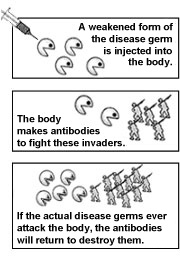
Vaccines do work! Don’t wait…vaccinate!
How Can a Parent Decide if Vaccines are Safe?
Every day parents are bombarded with information from doctors, nurses, TV hosts, books and the list goes on. Parents are best served by listening to a team of experts. We must trust the health care system that has given us the tools to prevent diseases that were so prevalent in children just a few years ago. Committees of expert scientists, clinicians and health care providers serve on the CDC (Center for Disease Control and Prevention), AAP (American Academy of Pediatrics), the Infectious Diseases Society of America and other groups. These experts look at scientific studies to see if they are performed carefully, are published in reputable journals and can be reproduced. Studies that do not meet these standards are not considered reliable. These groups have pulled vaccines in the past that have been determined to have unsafe side effects or side effects that outweigh the benefit of the vaccine. The groups have also repeatedly looked at studies regarding vaccines and asthma, diabetes, multiple sclerosis, SIDS and autism. No studies have shown a reliable causal relationship between vaccines and these illnesses. Be careful what you read…be sure it is reliable!
How vaccines work:
- A vaccine is usually given by a shot. At this time, there is one oral vaccine for rotavirus and a nasal influenza vaccine.
- The vaccine contains a dead or weakened germ that will NOT cause the disease.
- The body makes antibodies to fight the weak or dead germs in the vaccine.
- These antibodies practice on the weak germs so when the real strong disease germs, which are still out there, enter the child’s body the ready antibodies will know how to destroy them and the child will not become sick.
- Antibodies fight infectious diseases and usually stay in a person’s system even after the disease is gone to protect him or her from getting sick again–that is immunity. The body also has other cells that fight illness like T cells.
- Newborn babies are immune to many diseases because they have antibodies from their mothers—this only lasts about a year. The timing of the vaccine schedule is such that a child will develop immunity to a disease before he or she is most vulnerable.
- Immunizations protect your child and the community—herd immunity. Herd immunity protects unborn children, the elderly whose immunity may have waned and babies that are not yet fully immunized.
- When you choose to immunize your child and follow the recommended guidelines, your child is protected from diseases that can cause death, disability, or severe illness and even though we don’t often see these diseases; they are still out there today!
What About Side Effects?
If your definition of safety is something that does not have any side effects–then a vaccine is not 100% safe. All vaccines have side effects, but most of them are very mild. This might include a fever, soreness, redness or swelling at the vaccine site, and fussiness. Some side effects are more severe, but these are much rarer. Some parents ask if it would be safer to avoid the vaccine and the possible side effects. This is a choice that also has side effects, ones that are much more serious. The risk of your child being infected with the disease the vaccine prevents is greater than the risk of the serious side effects.
I Never See These Diseases, Why Get a Vaccine?
Many of the diseases that vaccines prevent are common. Pertussis or whooping cough is a very common disease that if your child is not immunized against–they are very likely to become ill with the disease. This is a serious disease especially in infants and the elderly. Last year in the Indianapolis area, there were large pockets of whooping cough outbreaks in several schools.
Many of the diseases could become common again. H-flu diseases such as meningitis and measles mumps and rubella have all “popped up” in areas where the immunization rates have fallen. A measles outbreak in the Indianapolis area during the Super Bowl a few winters ago and a more recent outbreak beginning in Disneyland both demonstrated how contagious this disease is and how quickly the disease can spread among children and adults who are not fully immunized.
Some diseases such as polio and diphtheria have essentially been eliminated from this country, but still occur in other countries. We are a small world with many people traveling internationally; your child can be exposed to these diseases by traveling or by people who have entered this country.
Following the recommended immunization schedule is one of the best decisions you can make for your child’s health. Here is the most recent approved vaccine schedule. Don’t wait, vaccinate!
Take a breath, enjoy the joyful moments of each day, and remember you don’t have to be perfect to be the perfect parent.
Cindy
Toddler bedtime blues
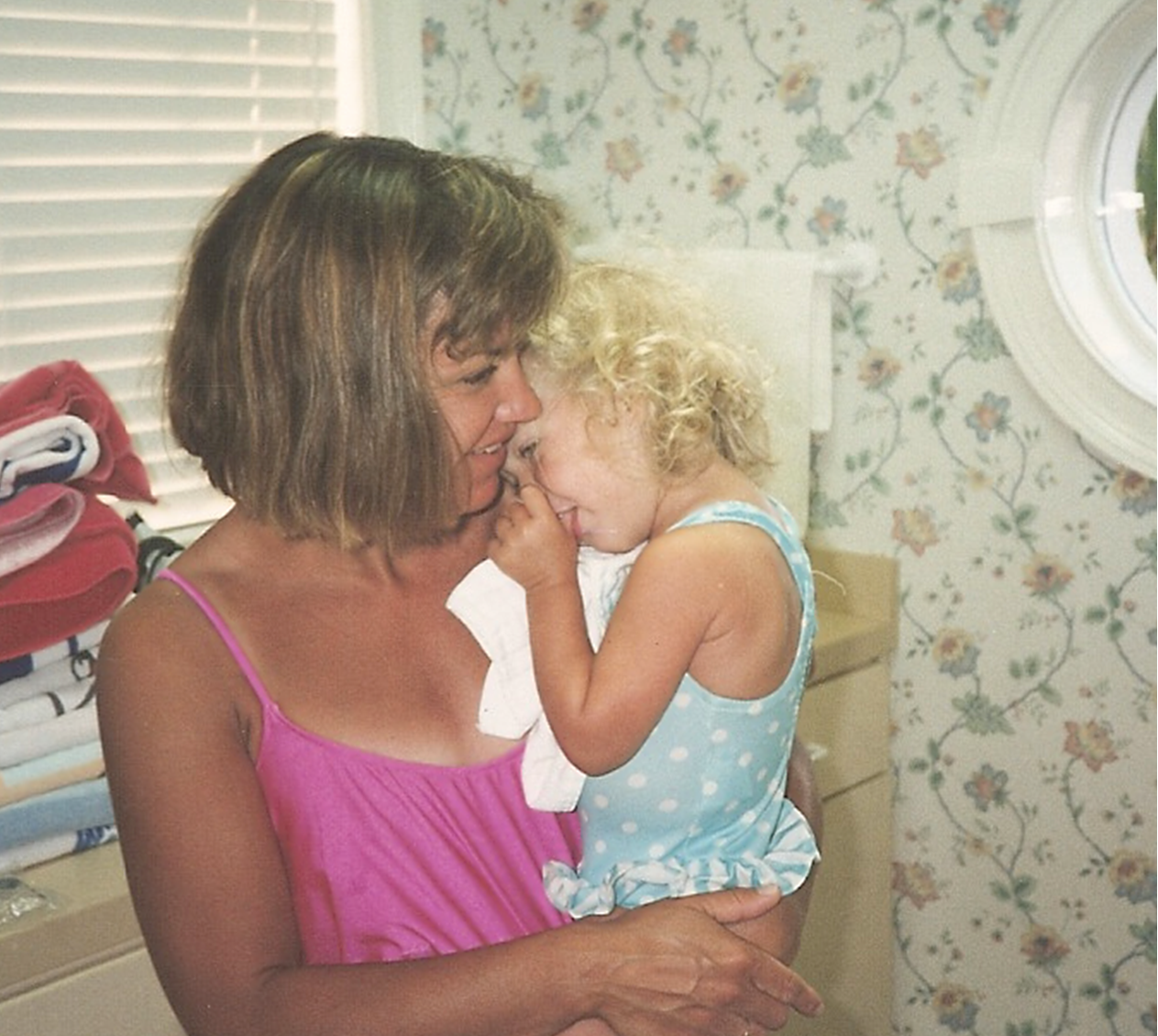
Time for that nap! Don’t miss the window for naps….toddlers need naps to sleep well at night! Establish good sleep routines for naps and night-time!
It was 8:30, I was tired, and my 2-year-old seemed to be gearing up for the evening. My patience was short and soon everyone ended up melting down. Not a very pleasant way to end the day! I hated when an evening in our home ended in a melt down! I always felt like such a terrible Mom, but evenings like that made me re-group and remember that naps, early bedtimes and calming routines were the cornerstone to good sleep for everyone. Besides, when the kids were in bed early, I always had time to take a breather, visit with Brad and reward myself with a bowl of ice cream for making it through another day!
Often children are sleeping pretty well as they enter the toddler years, and then it seems that overnight, bedtime becomes a battle. So many parents will tell me that their toddler “must not require much sleep” because they can’t get them to sleep in the evening. Soon the pattern becomes a toddler who is up until late, a parent that has no down time, and a household that is stressful every evening. The fact is, toddlers need about 13 to 14 hours of sleep in a 24 hour period. Without that sleep, tantrums increase, whining becomes the norm, and a toddler’s day is not filled with discovery and play but frustration and tears. These are some reasons families with toddlers often develop “bedtime blues”.
- If a toddler is not sleeping enough—they are harder to get to sleep consistently. How hectic are your days? If he is over scheduled or over stimulated you might want to slow it down for sleep’s sake. When a child is constantly on the go, it is hard to settle down for sleep. We need positive associations with sleep, not negative ones brought on by tantrums, yelling and harshness prior to bedtime.
- Separation anxiety is a true toddler fear, often this separation anxiety is the start of sleep problems during the toddler years.
- Toddlers are exploring control and testing. Your child will test to see if bed time is negotiable! Sometimes a tired parent will give in pretty easily setting the precedent for the following nights.
- Toddlers don’t want to miss anything! They realize that life goes on when they are napping or sleeping.
- Most parents underestimate their child’s need for sleep. Toddlers need between 13 and 14 hours of sleep in a 24 hour period. An increase in tantrums, whining, crying, even misdiagnosis of hyperactivity can come from a child who is chronically sleep deprived. Toddlers are wired “early to bed, early to rise” !
- Sleep is a health issue. Parents need to control this health issue just like you do routine health care. You wouldn’t let a child eat whatever they want for dinner, and you shouldn’t let a child decide his or her own bedtime. Sleep is a basic need like food or clothing, and you are the parent!
- There is no research that shows that letting a toddler fuss it out to sleep causes any psychological damage. A child who is consistently loved and cared for during the day will thrive, even if there are several nights of “crying it out” to go to sleep.
So what is a parent to do?
1. Watch your toddler’s behavior and do not let them become overly tired. Remember that an overly tired toddler has a difficult time going to sleep and staying to sleep. Usually, a toddler should not be up longer than a 5 hour stretch. If your toddler rises at 7:30 in the morning, he or she will be ready for a nap about 12:30. There should be about 5 hours between the nap wake time and bedtime. So a toddler that sleeps from 12:30 to 2:00 or 2:30 is ready for bed by about 7:30 in the evening.
2. Create a reasonable bedtime routine. The routine should be calming and repeatable each evening. Don’t let this routine take on a life of its own! Thirty minutes of bedtime preparation is all that is needed. A routine that is predictable will help your toddler calm down and know that bedtime is near. This routine should include calming the house about an hour before bed by dimming the lights and turning off the TV. Establish a routine that both you and your child enjoys. This routine might include taking a bath, brushing teeth, cuddling and reading a story, singing a song, saying prayers, talking about the day and planning tomorrow, providing a “lovey”, and giving another snuggle before leaving the room.
3. After the routine, your child may call or cry for you. Be strong and consistent. You can peek in and tell your child that it is night-time and time to sleep, but do not go back and rock and comfort to sleep. Your child will learn to fall asleep on his or her own. This is a learned skill, and an important one! Give your child suggestions. “You don’t have to sleep, just read your books or snuggle with your bear.” Leave a night-light on if necessary.
4. Establishing a sleep routine usually takes about three to four nights of consistency. Parents need to be on the same page and tackle this as a team! Do not confuse your child with two different approaches to sleep. Make a plan, and stick to it. Remember that sleep is a health issue, you are being a good parent!
If you establish good sleep habits with your toddler, your daytime hours will be much more fun! It is amazing how the “terrible twos” may just become terrific if you have a child that is not overly tired.
More to come….how to handle specific night-time challenges!
Take a breath, enjoy the joyful moments of each day, and remember you don’t have to be perfect to be the perfect parent.
Cindy
Keeping the Fun in the Holidays, and the Stress Out!

Every year when the holidays approach there is a “to do list” that can seem daunting. The fact is, your child will enjoy the season more, and you will too, if you limit that list and some of the stress that comes with it!
This year, promise yourself to enjoy the season and its magic with your child….here are a few suggestion that might help your level of holiday stress. Share your tips with us too!
- Set priorities. Sit down and discuss which traditions, decorations, parties truly matter to you and your family. Sometimes more fun results from doing less!
- Accept help. Consider if you really need and want to host family gatherings this year, and if so split the responsibilities with others. Remember, a clean house only lasts a minute when you expect a houseful of guests! Make your home presentable but not necessarily ready to pass the white glove test!
- Plan ahead. Break big jobs down into small steps. Try to be realistic about how long it takes to get things done with young children in the house and allow for the unexpected.
- Stop negative thoughts. If you find yourself feeling inadequate or thinking that you are letting others down remind yourself that your little one is who is most important. You are a Mom or Dad first!
- Keep a sense of humor. Even the worst holiday disasters have the makings of great family memories. Everything looks more perfect when looking back!
- Keep your child’s age and temperament in mind when planning the schedule. Do not schedule too many special events in a row. Try to be sure that your child has quiet time or “down time”. Touch can calm stress in a child and you.
- Shop on-line. Buy the same gift for as many people as possible. (Think picture gifts…your child smiling face is the perfect gift for so many!) Think about limiting your gift list now. What about a family name draw? White elephant gift? Shopping takes patience and shopping with a young child takes a saint! Try to swap babysitting. Have a plan when you do shop, children do best when on the move. Bring plenty of snacks and know when it is time to stop. Be the adult, don’t melt down when your child does!
- Make Santa a solo event! If a visit to Santa is in the plans, do just that! Visit Santa when your child is well rested. Children that have entered the stranger anxiety phase, which can begin around 7 to 8 months and last into toddler hood, often don’t enjoy the Santa visit. Read about Santa, talk about Santa, wave at Santa from a distance and then try a visit. TRY…don’t force your child to sit on Santa’s lap if there is anxiety and tears. Stand next to Santa for the picture or sit on his lap with you holding your child. If all fails…photo shop Santa into your picture! www.icaughtsanta.com Love this website!!!
- Make 12 dozen of the same kind of cookie rather than 12 different types. Concentrate on the people rather than objects. It is more important to have fun making cookies than have beautiful cookies.
- Make your tree child friendly! I am often asked if I think a tree is worth it when there are active toddlers in the house. ABSOLUTELY, remember family traditions glue your family together. Make your tree family friendly. Decorate it from your child’s eye level down with safe unbreakable ornaments with plastic hooks. Let your child explore those ornaments. (Our tree was redecorated from 2 feet down on many days! That is what made it so beautiful!) You might think about anchoring the top of your tree with fishing line to the wall, which will prevent a little one from pulling it over. A wide based tree stand is a must.
- Don’t expect perfection from yourself or your extended family. Family visits are not times to reform your nieces and nephews or discuss parenting views! Your child is your responsibility! Any comparisons of children are not important. If your child or you are criticized, ignore, if you or your child is complimented…enjoy! Do not pick battles with family members during gatherings, those battles are seldom worth it to you or your child. Be flexible!
- Exercise, breathe, remember to eat well and take a break each day.
- Include your child in holiday activities—it creates roots, bonds, and traditions that will strengthen your family and will create joy and many memories. Appreciate the moments, they are but a moment!
What are your tips to enjoy more and stress less???
Take a breath, enjoy the joyful moments of each day, and remember you don’t have to be perfect to be the perfect parent.
Cindy
How do you play with a toddler?
“I think of play as a toddler’s number one essential vitamin. He needs large doses of it every day. Play: Thrills the senses. Helps toddlers master movement. Stretches the mind. Stimulates language use. Boosts friend-making skills. Stimulates the immune system. Builds self-confidence. Improves nighttime sleeping.”
Dr. Harvey Karp, MD The Happiest Toddler on the Block
Toddlers love to play, and the fact is, they must play! Play is the basis of learning for a toddler. So yes, when a toddler squirts a banana out between his fingers, there is learning going on! Toddlers learn how to manipulate their world through play…and one of the biggest parenting responsibilities is to provide opportunities for your child to have free play. Developmentally many toddlers have separation anxiety, so they want to be near you when they play, but toddlers do not need you to lead their play. Play for a toddler is based on exploration. Too often parents want to “show” a toddler how to play…after all we know how that toy works, we read the directions! Toddlers enjoy play more and learn more when they figure out their own “right way” to play with a toy; and it often is different from the directions. The process of discovery through play is the tool to learning.
So how do you play with a toddler? Here are a few suggestions:
- Give your toddler physical help when needed. Often toddlers know what they want to do, but don’t have the gross or fine motor control to actually do it, remember a toddler is “long on will, short on skill!” This will often lead to frustration. A parent can help but not complete a task of play for the toddler. Example: A toddler may want you to show them how to fill a bucket to make a sand castle, but doesn’t want you to guide the entire process. I always had to remind my builder husband of this…he wanted to build the castle, his way! 🙂
- Be a partner. Many games need a partner. A toddler can’t play ball without someone rolling or tossing the ball to him. Let your toddler play the game until he or she is finished–not you. Repeating a game many times is how a toddler masters a skill. Don’t toss a ball a few times and quit when you are bored! Over and over again is how play works for a toddler!
- Demonstrate. A toddler will like to be given demonstrations on how things work or even suggestions. Let your child be free to use your suggestion or not. Do not interrupt his play to bring another idea or “show you how to do it”. Let your toddler lead the play.
- Help with concentration. A toddler’s attention span is only a few minutes especially if the play involves sitting still. If a parent sits with a toddler to talk, and encourage during a task, then the toddler will be able to concentrate longer and might be able to complete a difficult task like a puzzle. Encourage but don’t do it for your toddler.
- Help your toddler play with others. Toddlers will enjoy playing next to other children not really with other children. Parallel play is common at this age. Children will play next to each other without really cooperating. Toddlers are not developmentally mature enough to be left with another child to “fight it out”. They are not capable of sharing or playing fair without help. Give two toddlers similar materials or toys and let them play as each of them wants without interaction with each other. Eventually toddlers will begin to talk to each other, and a friendship will begin to develop. Often it is helpful for a toddler to play with older children too. Older children provide good examples of imaginative play, problem solving, sharing and it helps the older child develop leadership skills too. Guide your toddler in sharing…show them how to do it. Eventually they will develop the ability to share, but only after being shown many times.
- Be a good role model for your child when you play. Ask if you may take a toy and use the words please and thank you. When your toddler shares with you, praise your child for good sharing. Choose cooperative games like playing ball, and other activities that take turns. This helps teach a toddler good social skills which is necessary for cooperative play. Be patient, your child will be capable of sharing and playing with other children some time between the age or 2 and 3, if you have given your toddler the opportunity to develop the skill! One of the most important skills your child will need to develop before school is cooperative play and being a good friend!
- Beginning at 18 months encourage imitative and imaginative pretend play. This is a very important step for your toddler. Your child will start to imitate important people in his or her life, so that would be you!! Soon that play will change from simply imitating to imaginative play. Your toddler will take a block and pretend it is a cell phone, or will play “house” with your pots and pans. This starts symbolic thinking which is very important in developing math and reading skills later. Imaginative play also teaches empathy…it helps a child start to learn how others feel. It is fine for your little boy to play pretend with dolls and for your little girl to play pretend with trucks!! Imaginative play also improves language. Listen to your toddler, he will self talk as he pretends and will often tell you what to say when you are playing with him! Join in the conversations!
- Let your toddler play with safe every day items. We all know it…your child’s favorite toy may just be the plastic containers in the kitchen, the laundry basket, a silky scarf, or a box! Expensive toys really are not needed…your imaginative, creative toddler will play with every day things and enjoy it! These items increase creativity and imagination, so save some money and encourage this! Remember, a blanket over a card table works just as well as that expensive play house, and a muffin tin and different types of cereal to sort works as well as a fancy sorter!
- Get a little messy! Toddlers love sensory play. Get out the water, the finger paints, the pudding, the play dough, put on an apron and have fun! Toddlers need messy creative play. This will bring out the kid in you too! Sensory boxes filled with different items provide lots of creative messy play. Try filling the boxes with Easter grass, dried beans, rice, or anything else you can find at the Dollar Store. Think pouring and dumping, digging, sorting, searching, feeling, and fun.
So playing with your child is not rocket science. It is letting your child discover his or her world safely and creatively. So, sit on the floor, watch your toddler, participate in the play your toddler leads, keep the TV off, and get the plastic kitchen containers out and maybe a little pudding paint…it is going to be a fun day!
Take a breath, enjoy the joyful moments of each day, and remember you don’t have to be perfect to be the perfect parent.
Cindy
Infants need play time too!

You are your baby’s first toy!
Play time is important for infants too! Infants play by moving, by looking (especially you and that funny face), by exploring with hands, feet, and mouth, and by interacting physically (a little tickle), emotionally, and verbally. The time your baby spends playing with you is invaluable. You don’t have to “teach” as you play, your baby is learning by just interacting with you! You are your baby’s favorite toy!
Let your baby look at you!
Your baby is completely enthralled with YOU! Look at your baby and make silly faces. You will be amazed by your sweet baby trying to imitate some of your silly faces! Smile, coo, stick your tongue out…your baby will love it! If your baby keeps looking away, then he or she may have had enough of your silly face for a while, be careful not to over stimulate. This little game stimulates your baby’s social, visual, and emotional development. This teaches your baby ways to seek and receive your attention and affection. Who knew that you could be entertained by just looking at your baby! You and Dad have a new evening entertainment!
Play with touch!
Who doesn’t want to touch that soft baby skin? Touch your little one with different textures. Tissues, a blanket, the tip of your finger, a cotton ball…explore different touches across your baby’s tummy or cheeks. Talking makes this even more fun for your baby. “Doesn’t that tickle? OOOh feel good?” Watch your baby and you will be able to tell what his favorite is. Soon your little one will start to kick and get excited when you just start to touch his little belly. Touch teaches sensory awareness, verbal interaction and body awareness.
Give your baby something to look at.
A mobile is a great first toy for your child. It can be colorful or black and white with some accents of red, but your baby will love watching it! Be sure to take the mobile down once your child can reach it or is starting to try to sit up. The mobile provides visual stimulation and spatial awareness for your baby.
Try a little singing.
No, you can’t tell if your baby has a singing voice yet, 🙂 but your little one loves the sound of your voice. He or she has heard your voice even before birth! Put your baby in the center of the room and walk around the room singing and talking or making funny noises. Your baby will begin to look for where you are! Combine a little “Peekaboo” with it! Your baby will love it. This will help your baby develop listening skills and it helps develop a sense of trust in you as you disappear and come back!
Take your child on a tour.
Your home and backyard may be familiar to you, but your baby will love the change in scenery. Carry your baby around the house and you will find all kinds of neat things. Talk about what you see and what things do. Light switches are amazing! Head outside and discover the grass, the leaves, brush a flower across your little one’s cheek, introduce your child to the world! New sights, sounds and textures are exciting for your baby, and talking about them builds language skills too! Introducing your baby to the world may just help you appreciate the little things again too!
The oldies but goodies…all the finger plays you used to know.
Games like Peek-a-boo, So Big, Patty Cake, This Little Piggy, Itsy Bitsy Spider are fun for you and your baby. These finger plays and songs teach socialization skills, fine motor skills, object permanence, and are just plain fun. If you don’t remember these oldies but goodies, look them up online or check out a book at the library.
Make an obstacle course.
Your new little crawler will love to crawl over and under things. Get those pillows and cushions off the couch and start encouraging your baby to climb up and over, crawl, and tumble. This is fun and helps build gross motor skills and coordination. It might get your little one good and tired for a great nap too!
Try the fill and dump game.
Once your baby is sitting up and is developing some hand coordination, filling and dumping will be a favorite activity. Stacking cups, measuring cups, plastic containers all work well to fill up with water in the bathtub, sand, blocks, raw rice or any item that can be scooped up and dumped. Your baby will work on fine motor control, hand-eye coordination, and words like “full” “pour” “all gone” “empty” and others.
Stacking and knocking over.
Stacking will soon become the next fun activity. Those same stacking cups can be used to build a tower and knock it down. Blocks, stacking rings, plastic cups, books…anything can be used to stack and knock over. This helps with fine motor development and cause and effect.
These are just a few examples of the type of play your infant will love the first 12 months of life. Don’t rush out and buy lots of expensive toys, you will be your child’s favorite toy these first few months. There is no rush to “get ahead”; your child will learn all that he or she needs to learn with simple play. The pressure to get ahead often takes away the most valuable tool for learning…play. Be a kid again and fill your child’s day with play! Have fun!
What is your favorite activity with your infant? Post some of your ideas!
Follow Raising Kids With Love on Facebook for more tips!
Take a breath, enjoy the joyful moments of each day, and remember you don’t have to be perfect to be the perfect parent.
Cindy
School is starting….remember our kids are resilient!
I posted this blog at the start of school LAST year, I had hoped things would be back to “normal” this year. Although we are in a much better spot with vaccines for anyone age 12 and older, we still have a lot of fear as we send our children back to school. Remember, build resiliency in our children. Protect them the best we can, and then give them the tools to navigate this world where we are right NOW. I hope and pray that I will not be posting these thoughts again regarding COVID next year, but helping our children become resilient is essential for all the challenges they will face in life. Remember, our children are strong….when they feel loved and safe. Give them the tools to concentrate on the positive, adapt to the ever changing “normal”, and simply laugh and be a kid leaving adult problems be adult problems. I am confident in our kids….bring on the new school year!
It is “back to school” time. Honestly, I have always met this time with very mixed feelings. I was excited for my kids and their new experiences ahead and I loved shopping with them for new notebooks and pencils and the coolest folders and pencil pouches. The first day of school pictures of our kids scrubbed and smiling are treasures, but I also was a bit melancholy as I thought about the ending of summer and our relaxed schedule and the family fun of the season.
This year as I listen to the conversations of parents I hear the fear in their voices, I see masks on the school supply lists, I hear about distancing during lunch and recess, and no hugs from teachers; my heart just feels sad. What will these children feel like the first day of school? How will they feel wearing masks? Do they feel safe? How will they continue to grow and learn if their lessons are remote? Will there still be the excitement of the First Day of School?
Then I stop and tell myself, kids are resilient. Kids are pliable…their little hearts and brains adapt. It is easier for them than me.
We as parents cannot control the circumstances of our child’s world, but we can help him or her build resilience to be able to handle the bumps in the road.
Resilience is more than hanging on just hoping that things will get better, it is teaching your child to be adaptive and accept challenge. Resilience is also the ability to appreciate all that is good in life right now instead of concentrating only on the negative. This virus is a challenge, a big one, but there are always challenges in life and supporting our child’s resilience is one of the keys to a happy, successful life. So, what can we do as parents to support our children as they navigate their new world?
Control your emotions
- Your child will follow your lead. If you are anxious, your child will be anxious. Taking care of yourself is key to handling your anxiety. Exercise, eat well, establish a sleep routine, connect with others, and take time to just be. We can’t control the outside world, but we can control our home. Create calm, be sure your child feels safe.
Concentrate on the positive
- Talk in terms of what is good right now. I am a firm believer that every child should end the day on a positive thought. What has been good today? Resiliency focuses on the good even in times of challenge.
Help your child with self -regulationWhen a child reacts with tantrums, whining, acting out, or defiance, many are experiencing powerful feelings or emotions they can’t control. Be patient and work with your child on addressing the emotion:
Name the emotion or feeling.
“Change is difficult, are you feeling angry or frustrated with all the changes with school?”
Ask your child about what he or she feels.
Defining this helps your child realize when he or she needs to work on self -calming.
“When you are upset do you feel your heart pounding or your tummy feeling funny? That is what it feels like when you are very upset.”
Model what your child can do to stop the escalation.
Take a deep breath, take a step away, separate until he or she feels calmer.
Encourage talking about the feelings with you or a trusted friend.
Move on, find something positive to do.
Give your child some control or choices.
When a child is asked to do something he or she is not happy about, giving choices or some control will result in more cooperation.
“I am sorry that we have to wear masks to school for safety, why don’t you come with me to choose one that you like the best.” “I know it is disappointing that your soccer team has been cancelled. Would you like to kick the ball in the yard for practice every day or should we head to the park? You choose how to spend your time.”
Plan a few minutes every day to simply be with your child.
This is time to talk, play, laugh, just be. Your child needs this time to know that no matter what is happening, or how he or she is feeling or reacting, he or she is loved.
Don’t try to remove all stress or challenge from your child
- Placing your child in a bubble or rescuing him or her from all stressors, results in a less resilient child. Exposure to stress and challenge with loving support from parents helps a child develop coping skills.
So as my heart feels heavy as I see our children put on their masks, distance themselves from large groups of friends, navigate the disappointments of sports and other activities being cancelled, celebrate birthday parties with drive by parades….I still see children smiling, accepting the changes, spending more time with family, learning how to wash their hands and stay healthy, learning through technology, reading more books, having more quiet time and yes becoming more resilient. Maybe I can learn from them. Smile Mom and Dad, your child is resilient
Take a breath, enjoy the joyful moments of each day, and remember you don’t have to be perfect to be the perfect parent.
Cindy
Baby talk! Encouraging language development in your child.

Talking to your child and using lots of animated facial expressions are important for your child’s language development!
Believe me, hearing the sweet voice of your child say “Ma Ma” or “Da Da” is one of those moments you always remember. Later, I can remember thinking….”Maybe I should change my name, I am tired of hearing “MO-OMMMM!” Suddenly it was a two syllable word that rocked the house! Now, I love hearing “Mom” when I get that phone call or one of the kids bursts through the door for a visit! The fact is, language development in your child is exciting and fun, and early development is important. Studies show us that the number of words your child hears is proportionate to the size of his or her vocabulary that is developed. This is through direct spoken words to your child, through conversation or reading, not words heard from the TV or radio, or conversations around your child. Some experts tell us that a parent should be saying 30,000 words per day to their child. Wow, that is a lot of talking! Now I tell you this as a fun fact, not to have you tally mark each word you say to your child! I don’t want to add another task to your day, or worry to your list! The 30,000 per day number does send the message home though that talk is important, and as parents we have to work at talking and reading to our children! In this age of TV, computers, I-Pods and I-Pads, and smart phones; sometimes the spoken word and art of conversation is lost. As a parent we need to bring that art of truly talking with our children back!
What can we do to foster language development in our children?
- Talk to your child! When your infant is looking at you or an object…talk to your child! When your child coos, coo back…this is the start of the art of conversing. Describe what your baby is seeing. Talk about what you are doing during the day. Read stories and talk about the pictures in board books. Studies show who children that hear 30,000 words a day from birth to age 3 have better language skills at 3 but also have an academic edge still in 3rd grade…no matter the socioeconomic level! TALK A LOT TO YOUR CHILD! It can be the great equalizer for academic success!
- Say it again. This helps a child’s brain connect the sound and the meaning of words. A 1 year old is able to say most of the sounds to put together words, they just don’t have the word! Saying things over and over helps a child put those sounds they know into words.
- Always respond to any of those sweet sounds your child makes. When your baby coos, talk back. When your child squeals with a favorite toy, talk about how much your child likes that special toy. When your child babbles and reaches for an item, say what the item is before you give it to your child. Expand on your child’s sweet “words” by simply paying attention to them.
- Take turns with your child. This teaches conversation! Blow on your baby’s tummy and wait for that giggle. Do it again! Play peek-a-boo and other games that encourage taking turns in conversation…cause and effect.
- Look at your child. Your child needs to see your face when you are talking. Your child will look at your mouth to see how words and sounds are formed. When you make raspberries, your baby will make them too! Your smiles, facial expressions and encouragement gives your child positive reinforcement. Your child will make those sounds again when you pay attention.
- “Motherese” or “Parents” is good! The high-pitched sing-song voice most moms use to talk to their baby is good! Babies like the pitch of this type of talk and the slow pace helps them understand better. Teach Dad how to do it!
- Give your child the opportunity to talk. Don’t anticipate every need, allow your child to point and make attempts to ask for what he or she wants. Wait for the gesture or the word and then expand on it!
- Narrate your day. Talk to your baby as you change a diaper, give a bath, cook a meal. Describe what you are doing and what your child is doing. Sit next to your child and narrate his play. “I see you picked up a red block. Are you going to build?” “Oh you are rocking your baby.”
- Expand your child’s communication. When your child says “dog”, you can say “Yes that is a dog! It is a brown dog!”
- Read. Reading is a great opportunity to engage with your child. Your child will learn more words and will develop a love of books. Hearing the same book over and over helps to make language connections in your child’s brain. Strive for 30 minutes of reading a day. I love to “read children awake”. When your little one wakes in the morning or after a nap, take a few minutes to gently wake up with reading.
- Go on field trips! Take your child to the grocery, the post office, on hikes…talk about what you see! Watch your child, and see what he or she is interested in or excited about. Talk about that rock or stick he or she picks up!
- Use music. Music encourages your child to pronounce words and practice putting sentences together. Songs also help children remember things…I still can’t put things in alphabetical order without singing my A B C’s! 🙂
- Play language games. Point and name games like “Where is your nose?” “This is Mommy’s toes, where are your toes?” Helps your child becomeaware of himself and make language connections, plus it is fun!
- Don’t worry but refer early. Your child’s brain is a sponge ready for speech development in the first 3 years. There is a wide range of normal with speech development, but early referral is always best. Every day work on providing the opportunities to allow your child’s speech to develop. If you have questions or concerns, call your pediatrician or call your state’s Early Child Development Program.
Language Milestones from The American Speech – Language – Hearing Association
0-3 Months
- Baby will startle to sound
- Quiets or smiles when you speak to him
- Recognizes your voice
- Smiles at you
- Coos
4-6 Months
- Babbles and uses sounds with p, b and m
- Laughs
- Makes excitement sounds and unhappy sounds
- Makes gurgling sounds
- Likes music
7 Months – 1 Year
- Likes “peek-a-boo”, “patty cake”, “soo big!”
- Uses “speech” not crying to sometimes get your attention.
- Uses gestures like pointing, putting arms up, waving.
- Recognizes words that you say like “cup” and other common words.
- Starts to follow 1 step directions.
- About the first birthday will have about 2 or 3 words like ball, ma ma, da da, dog.
1 Year – 2 Year
- Points to pictures in a book when named.
- Knows animal sounds.
- Points to a few body parts when asked.
- Can say a two word question or sentence by age 2.
- Vocabulary expanding every month.
2 Year – 3 Year
- Follows two step directions.
- Has a word for almost everything.
- Is understood most of the time by those with him often.
- Speaks in 2 to 3 word sentences.
- Starting to understand concepts like big and little, up and down, in and on.
When do you refer?
- A baby who doesn’t respond to sound or who doesn’t make vocal sound.
- A child who does not point, or wave “bye bye” at 12 months.
- A child at 18 months who uses gestures over words to communicate.
- A child at age 2 or older who only imitates speech and does not speak spontaneously.
- A child at age 2 who can’t follow simple 1 or 2 step directions.
- A child at age 2 who parents are unable to understand at least 1/2 of the child’s speech, or a 3 year old child that a parent cannot understand 3/4 of the child’s speech.
- A 4 year old child who is not understandable by others.
- Don’t sit and worry….refer early. Most speech referrals are made between 15 months and 2 years of age.
Remember, infants, toddlers, and preschoolers are like little language sponges. Talk, talk, talk, and turn that TV off! Your child will soon be yelling “MO-OMMMMM!”….be careful what you wish for!! 🙂
Take a breath, enjoy the joyful moments of each day, and remember you don’t have to be perfect to be the perfect parent.
Cindy
You both are ready…ditch those diapers!
So, your little one is growing up! You are starting to see signs that potty training just might be in your child’s immediate future. You are ready to help this process along….so what next?
When you think the time is right…
- When you are ready and have no major stresses in your life.
- When your child is showing increased interest in the potty.
1. Go buy “big girl” or “big boy” pants together. Talk about not getting those special pants wet and dirty!
2. Start by using the potty several times a day on a routine. Put your child on the toilet 20 to 30 minutes after every meal, before naps, right after naps, before bath…develop a routine.
3. Feed your child fruits and fibers to keep stool soft. Give your child plenty to drink so there are many opportunities to potty.
4. You might try letting your child play in lukewarm water with toys as he or her sits on the potty…..it may encourage “peeing”.
5. When you are ready to potty train full go—-ditch the diapers!! Diapers or pull ups make it difficult for a child to feel when they start to wet and give a sense of security. Even the feel and learn type pull ups are not like the good ole’ fashioned cotton underwear! You can put rubber pants or a disposable pull up over the underwear to help contain accidents. Do not switch back and forth from diapers to underwear, this becomes very confusing for a child.
6. Start setting the timer for every hour announcing “it’s potty time!” Try staying home for a few days and close to the potty to get the process started. A weekend is a great time to start!
7. Try letting your child run naked with a long t-shirt outside or inside on non carpeted floors for periods of time. When you see your child begin to pee or poop, bring them to the potty. This allows your toddler to feel and learn very easily.
8. Handle accidents with patience. Very little reaction…just “oops next time we will use the potty!” Remember this is a process! When there is an accident, place your child immediately on the potty to “finish”. This will help them equate the potty with the action.
9. Be sure your child is really ready. If you start too soon the road will be more difficult. If you meet resistance, take a break for a couple of weeks and then try again.
10. Adjust your attitude. It is important that children are never forced, shamed or manipulated into using the toilet.
11. Celebrate success. Success is just sitting on the potty at first! Decide what reward system you will use and what works for your child. Some parents find sticker charts, songs, high fives, M & Ms or other special treats will do the trick. M & Ms were perfect for us….one for my child and two for me! Do not over celebrate as this can cause stress for some children, especially children who are real “pleasers”.
12. Do not teach any other difficult tasks during this time.
13. Remember the mantra “two steps forward one-step back”. Often children start well and then lose some interest or start having accidents. Remember, it takes a lot of work for a toddler to figure this out! Sometimes concentration is lost!
14. Be sure to teach good hygiene. Teach toddlers how to wipe bottoms, wash hands, and flush toilets with the lid closed. Toddlers will not be able to completely wipe themselves, especially after a bowel movement, without help for some time, often until about age 5.
15. Potty train for daytime only…leave night time training for later. This is a different process! Use diapers or disposable training pants for night time use, you can call them “sleeping pants” to keep from confusing your child.
So, give it a try if the timing is right! Both you and your child will feel so accomplished. Practice that celebratory “potty dance” and pick up some M & Ms to reward your child and yourself. Tomorrow…a few “potty pitfalls” that can make potty training a little more challenging.
Take a breath, enjoy the joyful moments of each day, and remember you don’t have to be perfect to be the perfect parent.
Cindy
Introducing Solid Foods to Your Baby
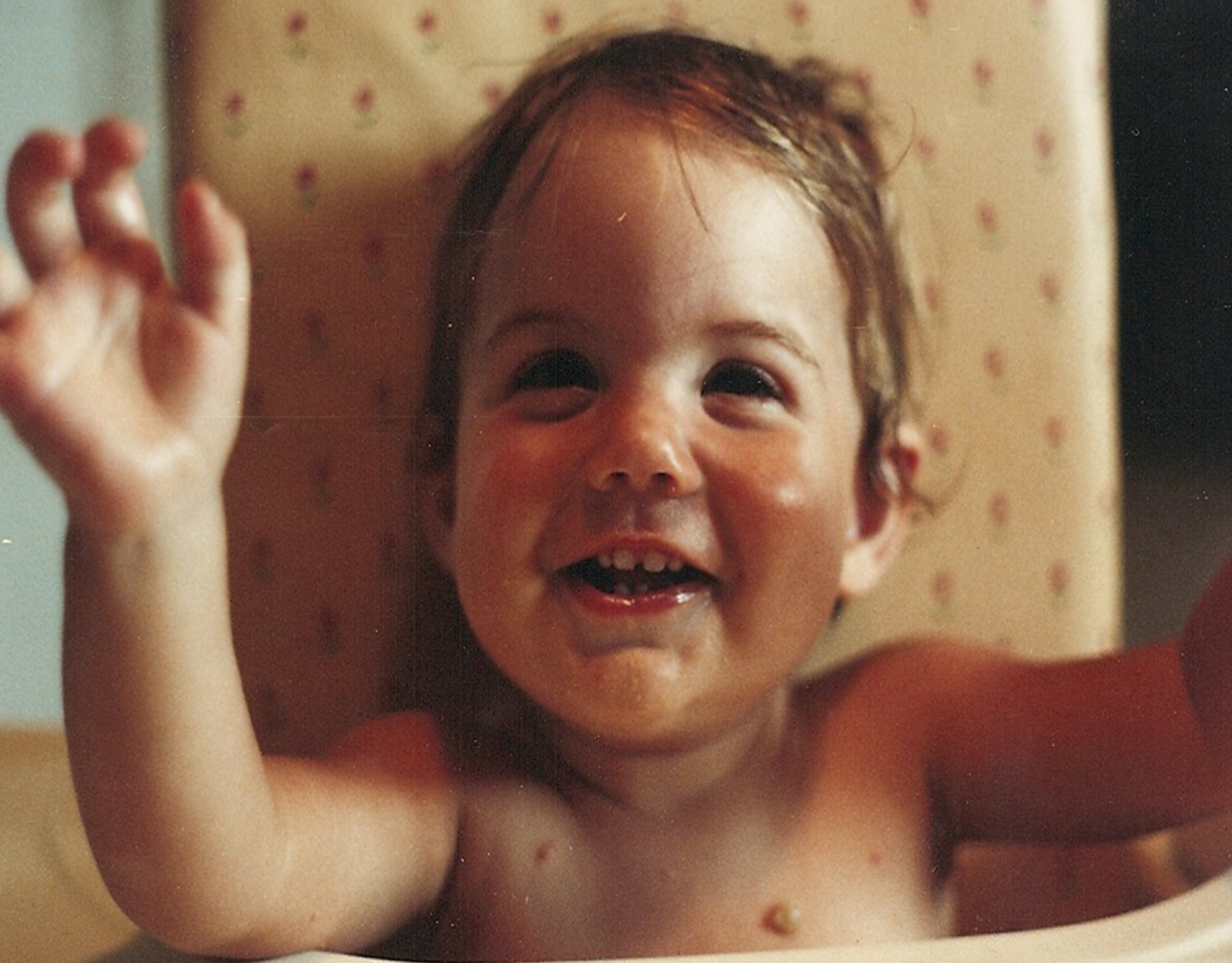
Our daughter Kelsey loving her solid foods! She was needing a dunk in the tub after this meal!
I can remember the excitement of introducing the kids to their first tastes of “real food”. The camera was ready, they were sitting up and eager, and that first bite often resulted in the funniest look as they had that first taste.
I know that starting solid foods often comes along with many questions. What food is first? What about allergies? How much? When? And the list goes on and on. To be honest, there are not many hard and fast “rules” that come with starting your little one on solids. As with many issue of parenting, you may see many different suggestions and contradictory information which can increase your anxiety. Like many of my parenting tips, I start by saying “Relax!” There really is not a “wrong” way to do this! So get your cameras ready….the introduction to solid food is a milestone for every parent and baby, and is darn cute too!
The American Academy of Pediatrics tells parents that solid foods should be introduced between 4 and 6 months of age. At any point between 4 and 6 months, it is just fine! More important than age, we like to see that the baby is developmentally ready for solids.
Why should I wait until my baby is 4 to 6 months old?
Ideally, breast milk or formula should be the main nutrition for a baby’s first 4 to 6 months. The foods that you introduce after that are really just supplemental to the nutrients in the breast milk and formula. Solids are really an education in taste and texture for the first year of life. Breast milk or formula is the core of your baby’s diet for the first full year providing at least 75% of your baby’s calories. After a year, your baby will start to meet more and more of their nutritional needs through solid foods. By age 3, a child should only be getting about 10-20% of their calories from milk, and the rest from solid foods.
Isn’t this different from when I grew up?
Maybe. The school of thought regarding solids has changed over the years. In the 1920’s, solid foods were seldom offered to babies before a year. During the 1960’s and 1970’s solid foods often were fed to infants in the first three months. There are pictures of me being fed rice cereal at just a few weeks of age. (I AM pretty old!) Moms were often told then that the cereal would help a young infant sleep through the night. I promise it doesn’t! Slowly, we have come almost full circle with the recommendation now to wait until your baby is at least 4 months old.
Why do we wait now?
We have learned that babies are just not developmentally ready for solids. More important than actual age is your baby’s development.
- Before 4 months of age, a baby’s digestive system is too immature for solids.
- Before 4 months of age, a baby’s throat muscles are not developed for swallowing solids and there is a tongue thrust…food that is placed in the mouth is pushed back out with his tongue. Most babies no longer have this tongue thrust by 6 months.
- Before 4 months of age, your baby has no ability to tell you that he is full. Until around 4 to 5 months, babies will not turn their head to refuse food.
- Before 4 months of age, solid foods will result in your baby taking less breast milk or formula that has the correct amount of nutrients and fat for growth.
- Solids should be introduced no later than 6 months. Waiting too long for the introduction of solids can result in a delay in your baby’s eating and chewing skills, and recent studies now show that waiting longer than 6 months of age may actually increase food allergies.
What are some signs that might show my baby is developmentally ready for solids?
- Your baby is between 4 and 6 months in age.
- Your baby has at least doubled his birth weight.
- Your baby can sit with support.
- Your baby has good head and neck control and is able to turn his head to refuse food.
- Your baby’s tongue thrust reflex is diminishing.
- Your baby is breast-feeding more than 8 to 10 times a day and still wants more or your baby is taking 32 to 36 ounces of formula and wants more.
- Your baby is reaching for your food, or shows an interest when you are eating.
What food should be first?
Traditionally babies have been started on an iron fortified, easily digested cereal, like rice. This is because at 6 months of age, a baby’s natural iron stores from Mom are beginning to diminish. So, most parents start with some type of cereal, often rice. Other than the iron, there is not much nutrition in the rice cereal. I feel that a white rice cereal is not the best choice for a first food….there really is no hard and fast rule regarding what food you should start first. There are many good options such as:
- Bananas
- Avocado
- Sweet potato
- Pears
- Applesauce
- Carrots
- Squash
- Strained meats
- Whole milk yogurt
First foods should be single ingredients. Foods should be introduced one at a time with a couple of days in between each new food so if there is any type of reaction you will know which food is likely the culprit!
Some will suggest that a parent introduce vegetables before fruits so the baby does not taste the sweet food first. I don’t feel this is necessary. Babies who are breast-fed have tasted sweet…breast milk is sweet! No matter if a parent introduces fruits or vegetables first, babies will always prefer the sweeter taste. So, it really doesn’t matter! Introduce a vegetable, then a fruit, then a meat….whatever works for you and your child!
How do I start?
- Start with 1 to 2 tablespoons of a single ingredient pureed food. It should be a liquid consistency in the beginning. Your goal is not to fill up your child’s tummy, but to expose him to the new taste and texture. Be careful not to substitute food for breast milk or formula. During the first year babies should still have 4-6 breast feedings or 24-36 ounces of formula in 24 hours. If milk consumption drops, you may be feeding too many solids.
- Use your finger as the first spoon and have your baby suck the food off your finger. You then can move to a rubber coated spoon.
- Offer the first meal when you are not in a hurry and your baby is not overly tired or too hungry. I suggest you nurse or bottle feed first, and then an hour later try the solids.
- Always offer the new food in the morning so if your baby would have any kind of reaction or upset tummy, it doesn’t happen at night!
- Watch your facial expressions. Babies learn what foods you like and don’t like! Everything should be yummy!
- If your baby makes a face or gags with the new taste or texture, it does not mean that he doesn’t like the food. It takes at least 10 to 15 introductions of a food before a baby can develop a like or dislike! We want our babies to have a wide taste pallet! Don’t limit your baby to only the foods you like, especially if you are picky!
- Watch carefully to see when your baby has had enough. A baby may turn his head, close his mouth, bat the spoon away, or become fussy. Do not force food. Remember, the majority of your baby’s calories should be coming from breast milk or formula.
- It makes no difference to a baby if he gets green beans for breakfast! There is no right or wrong food for each meal.
- Start with one meal a day and then move to twice a day. By 9 months of age, most babies are enjoying solid foods and are eating 3 meals a day.
- There should be “dinner and a show!” Babies like smiles, airplane spoons, songs, and fun with the meal. Enjoy it!
Tips for making mealtime easier?
- Show your baby how you take a bite and enjoy your food. This may encourage a reluctant eater.
- Use the upper lip to sweep food off the spoon.
- Dress yourself and your baby in clothes that won’t be hurt by a messy eater! Many times I stripped my little ones down and sometimes a bath was necessary after the meal! Babies are messy eaters….no way to get around that!
- Use suction cup bottomed bowels. Keep your baby’s hands busy, give him a spoon to hold too!
- No pressure. It is O.K. if your baby misses a meal. If your baby is fighting the solid foods, skip a meal or two and then try again. Remember, solids are mainly an education to taste and texture. Your baby should be receiving most of his nutrition from breast milk or formula.
What about water and juice?
Babies do not need any other liquid besides breast milk or formula for the first 4 to 6 months. This means no juice or water. Once solid foods are introduced, a baby should be introduced to a cup. Water may be given in a cup with a meal. Your baby will probably just take a few sips. Juice is not recommended for the first year. Juice provides very little nutritional value and has a lot of empty calories.
What about allergies?
Some health care providers may suggest waiting to start foods like eggs, fish, or peanut butter until your baby is older because of the risk of food allergies. Studies have shown that avoidance of foods does not prevent the allergy and may actually increase the incidence of food allergies. In January of 2010, the American Academy of Pediatrics issued new guidelines recommending that foods should not be avoided unless there was a significant family history of food allergies. Check with your health care provider regarding his or her suggestions about these foods.
One food that should be avoided until after the first birthday is honey. Honey carries the risk of your baby developing botulism. This does not include honey that is in foods like crackers or cereal, only pure honey.
How will I know if my baby is allergic to a food?
If your baby has vomiting, diarrhea, a new diaper rash or skin rash including hives, or develops wheezing, then this could be a food allergy. If your baby has gas, or a tummy ache it may just be a food intolerance. If you think your baby has had an allergic response or an intolerance, you should stop giving the food to your baby. You might try the food again in a couple of months if the reaction was mild and your baby may do just fine. If there was a more severe reaction like vomiting, hives, or wheezing talk to your health care provider before giving the food again.
What about homemade baby food?
Some parents choose to make baby food. To be honest, if you are waiting to start solids until your baby is 6 months old, your little one will not eat true puree food for very long. Most babies will start finger foods at about 8 months and are eating mostly table food by 11 months of age. It is not terribly difficult or time-consuming to make baby food. You may choose to make all of your own, or use some store-bought and some homemade. Your baby will also do just fine if you choose to use all store-bought. Here are some tips for making your own.
- You will need something to grind or puree food. You might use a blender, food processor or simply a fork as your little one gets used to texture.
- You will need storage containers like ice-cube trays or something similar. There are trays made just for baby food, but ice-cube trays will work just the same.
- Choose fruits and vegetables that are in season and fresh, or frozen for the best nutritional value.
- Wash your hands well.
- Wash the fruit and vegetables well!
- Bake, boil, or steam the vegetables or fruit. You then can mash or puree using water or breast milk/formula. If you boil the vegetables/fruit, use the leftover liquid to mash the food to prevent loss of nutrients in the water.
- Peel and pit fruits and vegetables and strain if necessary.
- You can use seasoning! Babies like flavor! Try to stay away from salt.
- Remove skin and trim fat from meat. You can puree cooked meat, or grind it, or simply cut it up into very small pieces for an older baby.
- Freeze the food in ice-cube trays. Remove the cubes of food and store in labeled freezer bags. One cube is about 1 ounce of food.
- When ready, thaw the amount you will use. If your baby does not eat all the food prepared in the dish, it must be thrown out, it cannot be saved.
- Use caution heating with a microwave. Microwaves can cause hot spots..be sure to stir and test the food.
There are many books with tips and recipes for making baby food. Some of my favorites include:
Super Baby Food By: RuthYaron
Baby Bites By: Bridget Swinney
Top 100 Baby Purees: 100 Quick and Easy Meals for a Healthy and Happy Baby By: Annabel Karmel
So, the introduction of solids really should not make you anxious, it should be exciting and fun! Enjoy this milestone for you and your baby! Your baby’s first taste of solid food only happens once! Don’t over think the process. Get ready for dinner and a show!
Take a breath, enjoy the joyful moments of each day, and remember you don’t have to be perfect to be the perfect parent.
Cindy
Resources
American Academy of Pediatrics
 raisingkidswithlove